
£60,000 Salary Rent UK: Earning a high income can give you more options, but the amount of rent you can comfortably manage depends on your take-home pay, not just your total annual salary.
A £60,000 salary may allow you to pass affordability checks for higher-priced rental properties. However, passing a landlord’s affordability check does not automatically mean that the property is a sensible financial choice. Rent is only one part of your monthly budget. Council tax, energy bills, food, commuting, insurance, debt repayments, savings, and personal spending all need to be considered.
The best question is not simply, “How much rent will a landlord approve me for?”
It is, “How much rent can I pay while still saving money and living comfortably?”
For most people earning £60,000 per year, a balanced rent budget is usually around £1,250 to £1,550 per month. You may be able to manage more in some circumstances, especially if you share bills or have low debt repayments. But paying too much rent can reduce your savings and leave little room for emergencies.
This guide explains your 2025/26 take-home pay, how much rent you can manage, reasonable landlord affordability rules, practical monthly financial planning examples, London rental costs, and common questions.
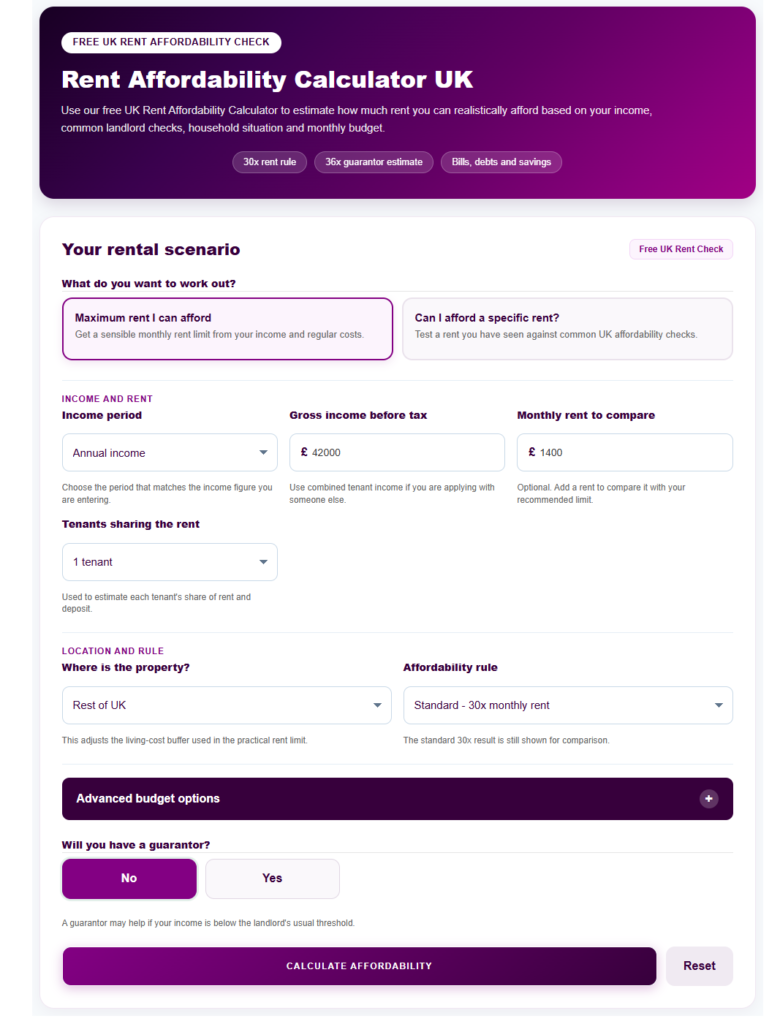
Click Here:Rent Affordability Calculator UK
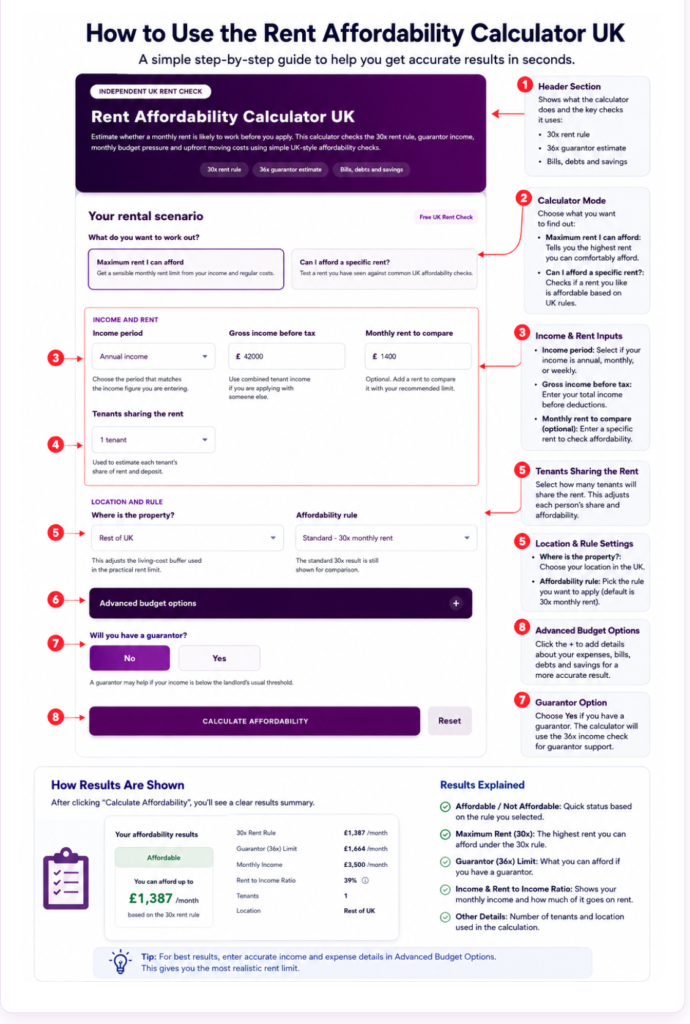
How to Use the Rent Affordability Calculator UK
£60,000 Salary Take-Home Pay in the UK for 2025/26
£60,000 Salary Take-Home Pay in the UK for 2025/26
For the 2025/26 tax year, someone earning a gross annual salary of £60,000 in England, Wales, or Northern Ireland will typically take home around £45,357.40 per year after Income Tax and employee National Insurance contributions.
This works out at approximately:
- £3,779.78 per month
- £872.26 per week
- £174.45 per working day, based on a five-day working week
These figures assume a standard tax code (1257L), no student loan repayments, no workplace pension deductions through salary sacrifice, and no taxable employment benefits.
Read more:Final Grade Calculator: 7 Easy Tips to Know What Grade You Need on Your Final Exam| Calculation | Amount |
| Gross annual salary | £60,000 |
| Gross monthly salary | £5,000.00 |
| Personal Allowance | £12,570 |
| Taxable income | £47,430 |
| Income Tax at 20% on first £37,700 | £7,540.00 |
| Income Tax at 40% on remaining £9,730 | £3,892.00 |
| Total Income Tax | £11,432.00 |
| Employee National Insurance at 8% | £3,016.00 |
| Employee National Insurance at 2% | £194.60 |
| Total National Insurance | £3,210.60 |
| Total annual deductions | £14,642.60 |
| Estimated annual take-home pay | £45,357.40 |
| Estimated monthly take-home pay | £3,779.78 |
Your actual take-home pay may be different if you pay into a workplace pension, repay a student loan, receive bonuses, use salary sacrifice or live in Scotland, where Income Tax bands are different.
How Is £60,000 Take-Home Pay Calculated?
The first £12,570 of income is covered by the standard Personal Allowance, so you do not pay Income Tax on that amount.
Your taxable income is:
£60,000 − £12,570 = £47,430
| Tax Component | Calculation | Amount |
|---|---|---|
| Basic Rate Income Tax (20%) | £37,700 × 20% | £7,540 |
| Higher Rate Income Tax (40%) | £9,730 × 40% | £3,892 |
| Total Income Tax | £7,540 + £3,892 | £11,432 |
| Employee National Insurance (8%) | £37,700 × 8% | £3,016 |
| Employee National Insurance (2%) | £9,730 × 2% | £194.60 |
Your total National Insurance contribution is:
£3,016 + £194.60 = £3,210.60
After Income Tax and National Insurance:
£60,000 − £11,432 − £3,210.60 = £45,357.40
This gives you an estimated monthly take-home income of £3,779.78.
Read more:How Much Rent Can I Charge in the UK? Proven Rent Pricing Guide for Landlords 2026How Much Rent Can You Afford on a £60,000 Salary?
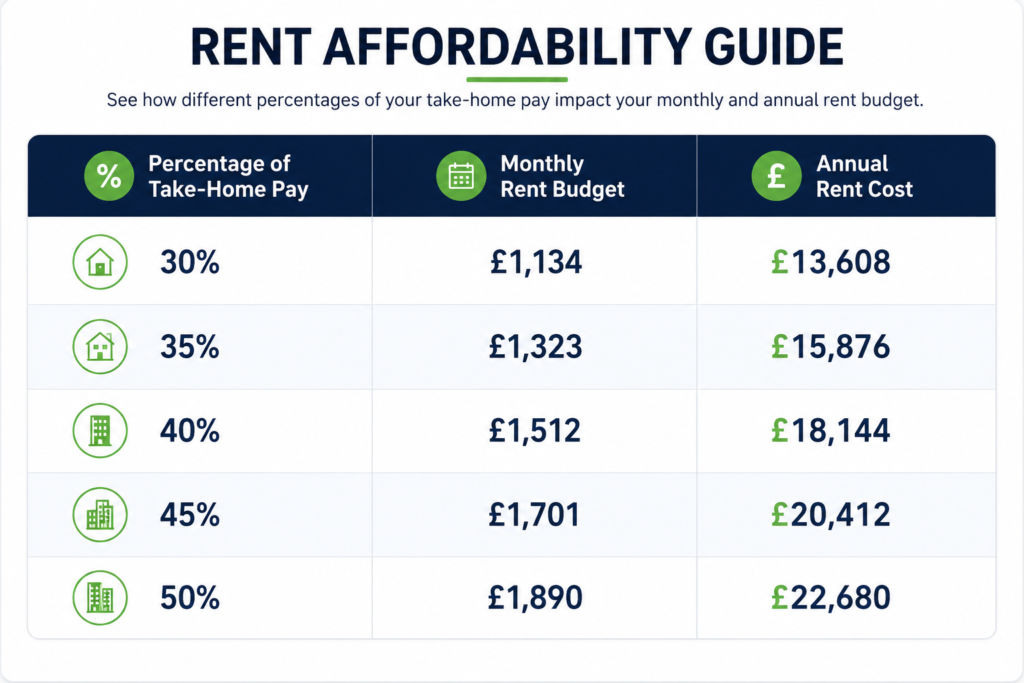
A common guideline is to spend around 30% to 40% of your monthly take-home pay on rent.
With an estimated take-home pay of £3,780 per month, your budget could look like this:
| Percentage of Take-Home Pay | Monthly Rent Budget | Annual Rent Cost |
| 30% | £1,134 | £13,608 |
| 35% | £1,323 | £15,876 |
| 40% | £1,512 | £18,144 |
| 45% | £1,701 | £20,412 |
| 50% | £1,890 | £22,680 |
For most people, a rent budget between £1,250 and £1,550 per month is a sensible range.
This usually leaves enough room for bills, food, travel, savings, insurance, social spending, and unexpected costs.
Rent between £1,600 and £1,700 may still be manageable if you have low debt and stable employment. Rent above £1,800 can become restrictive for someone renting alone, especially when bills are not included.
Instead of choosing a rental property based only on your salary, start with the amount that actually reaches your bank account each month. Write down your take-home pay and subtract your regular costs, including council tax, utilities, groceries, transport, insurance, debt repayments and savings. The amount left over gives you a much clearer idea of what you can comfortably spend on rent. For example, if you have £3,780 coming in each month but already spend £1,400 on essential costs and want to save £500, you should not automatically use the remaining £1,880 as your rent budget. Keeping some money aside for unexpected expenses gives you more financial breathing room.
The 30% Rent Rule on a £60,000 Salary
The 30% rent rule suggests that you should try to spend no more than 30% of your take-home income on rent.
For a £60,000 salary, this is approximately:
£3,780 × 30% = £1,134 per month
A rent budget of around £1,100 per month can support greater financial security. It can help you save for a house deposit, build an emergency fund, invest, travel, or pay off a loan faster.
This approach may be practical in many parts of the Midlands, North West, Yorkshire, Wales, Scotland, and the North East. It may be harder to achieve in central London or other high-cost areas.
The 30% rule is a useful target, but your own expenses should ultimately determine what rent level is right for you.
Is the 40% Rent Rule More Realistic?
| Scenario | Calculation | Amount |
|---|---|---|
| Monthly Take-Home Pay | — | £3,780 |
| 40% of Take-Home Pay for Rent | £3,780 × 40% | £1,512 per month |
| Recommended Rent Budget | — | £1,450 to £1,550 per month |
It may be manageable if:
- You do not have expensive car finance payments.
- You have limited credit card or loan repayments.
- Your commuting costs are affordable.
- You do not have major childcare expenses.
- You have emergency savings.
- You can still save money each month.
Once rent reaches 45% or more of your take-home pay, it is important to review your overall budget carefully.
Read more:30x Rent Rule UK – What It Means and How Letting Agents Calculate AffordabilityCan You Afford £1,400 Rent on a £60,000 Salary?
Yes, £1,400 per month is usually a comfortable rent level on a £60,000 salary.
It represents around 37% of estimated monthly take-home pay.
| Monthly Expense | Estimated Cost |
|---|---|
| Take-home pay | £3,780 |
| Rent | £1,400 |
| Council tax | £180 |
| Gas and electricity | £160 |
| Water | £40 |
| Broadband and mobile | £65 |
| Groceries | £375 |
| Transport | £250 |
| Insurance and subscriptions | £130 |
| Savings | £500 |
| Personal spending | £350 |
| Remaining monthly buffer | £330 |
This is a well-balanced budget. It allows you to cover regular expenses, save consistently, and maintain a useful buffer for unexpected costs.
Can You Afford £1,600 Rent on a £60,000 Salary?
A £1,600 monthly rent can be manageable, but it requires more careful planning.
It takes around 42% of estimated take-home pay.
| Monthly Expense | Estimated Cost |
| Take-home pay | £3,780 |
| Rent | £1,600 |
| Council tax | £190 |
| Gas and electricity | £170 |
| Water | £40 |
| Broadband and mobile | £65 |
| Groceries | £375 |
| Transport | £250 |
| Insurance and subscriptions | £130 |
| Savings | £400 |
| Personal spending | £300 |
| Remaining monthly buffer | £260 |
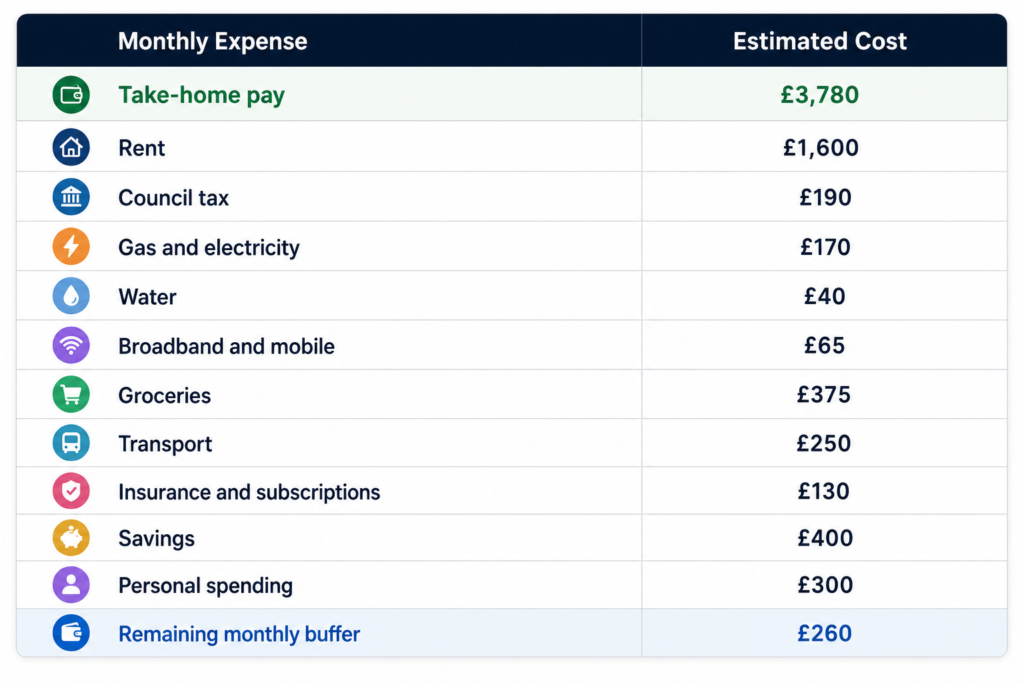
This budget can still work, but a higher rent means you need to be more disciplined with savings and lifestyle spending.
A higher salary does not mean you need to increase your rent to match it. If you move from a lower-paid job to a £60,000 salary, keeping your previous housing costs for a while can make a significant difference to your finances. The extra income could instead be used to build an emergency fund, increase pension contributions, pay off debt or save for a house deposit. Before upgrading to a more expensive property, consider whether the extra space or location is worth reducing the amount you can save each month.
Can You Afford £2,000 Rent on a £60,000 Salary?
A £2,000 monthly rent is usually expensive for one person earning £60,000 per year.
It takes up more than half of your estimated monthly take-home pay before other expenses are considered.
| Monthly Expense | Estimated Cost |
|---|---|
| Take-home pay | £3,780 |
| Rent | £2,000 |
| Council tax | £200 |
| Gas, electricity and water | £230 |
| Broadband and mobile | £65 |
| Groceries | £375 |
| Transport | £250 |
| Insurance and subscriptions | £130 |
| Savings | £200 |
| Personal spending | £300 |
| Remaining monthly buffer | £30 |
This financial plan leaves almost no room for emergencies, holidays, larger savings goals, medical costs, or unexpected travel.
A £2,000 rental may be more suitable if you share costs with a partner or have additional household income.me.
How Do Landlords Calculate Rent Affordability in the UK?
Landlords and letting agents usually look at your gross annual salary rather than your take-home pay.
A common affordability rule is that your annual gross income should be at least 30 times the monthly rent.
| Affordability Example | Calculation | Result |
|---|---|---|
| Required Annual Income for £1,800 Rent | £1,800 × 30 | £54,000 required annual income |
| Affordability Check | With a £60,000 salary | You may pass this affordability check. |
| Maximum Annual Rent (40% of Gross Income) | £60,000 × 40% | £24,000 per year |
| Maximum Monthly Rent | £24,000 ÷ 12 | £2,000 per month |
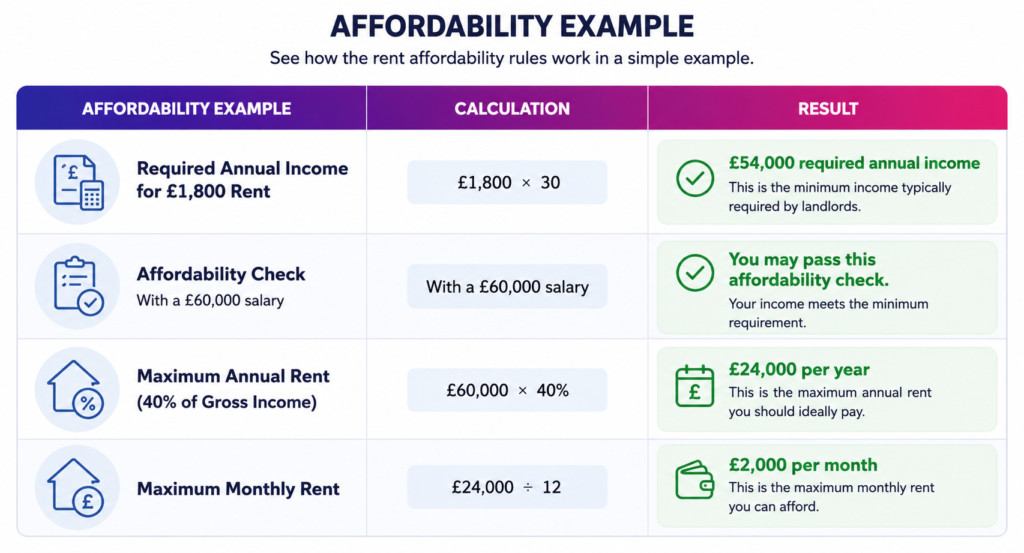
This means you may be approved for rent around £1,900 to £2,000 per month, depending on your credit score, job type, references, debts, and letting agent requirements.
However, landlord approval is not the same as affordability for your own lifestyle. A lower rent can often give you far more financial freedom.
Read more:House Share Rent Calculator UK – 7 Best Rent Split TipsHow Much Rent Can You Afford in London on £60,000?
A £60,000 salary can support renting in London, but renting alone in a central one-bedroom flat can still be expensive.
Many one-bedroom properties can cost £1,700 to £2,200 per month, depending on the area. Paying £2,000 per month may leave limited room in your budget after council tax, bills, and transport costs.
More balanced options include:
- Renting a high-quality room in a flatshare.
- Renting in outer London.
- Choosing a studio apartment.
- Sharing with a partner or friend.
- Choosing an area with good transport links and lower rent.
- Looking for properties where some bills are included.
If you can keep rent around £1,300 to £1,600 per month, you are more likely to have room for savings and maintain a comfortable lifestyle.
If you are renting in London, compare the complete cost of living in each area before deciding where to live. A cheaper property further from work may lead to higher travel costs and more time spent commuting. For example, paying an extra £150 in rent to live closer to work could be worthwhile if it saves £100 in monthly transport costs and significantly reduces your commuting time. Check the rent, travel costs, journey time and local council tax together rather than choosing an area based on rent alone.
How Much Rent Can You Afford Outside London?
Outside London, a £60,000 salary can provide a very comfortable rental lifestyle.
In many cities and towns, you may be able to rent a high-quality one-bedroom or two-bedroom property for £1,000 to £1,500 per month.
| Comparison | Calculation | Amount |
|---|---|---|
| Monthly Rent Difference | £2,000 − £1,300 | £700 per month |
| Annual Difference | £700 × 12 months | £8,400 per year |
| Five-Year Difference | £8,400 × 5 years | £42,000 (before savings interest or investment growth) |
Lower rent can help you build a house deposit, clear debt, invest more, or simply enjoy greater financial flexibility.
Remember to Include Bills in Your Rent Budget
The advertised rent is not your full monthly housing cost.
Before applying for a rental property, make sure you also account for:
- Council tax
- Gas and electricity
- Water
- Broadband
- Mobile phone
- Contents insurance
- Food and household shopping
- Travel and commuting
- Car payments, fuel and insurance
- Loan or credit card repayments
- Gym memberships and subscriptions
- Pension contributions
- Savings goals
- Childcare costs, if relevant
A £1,500 property can easily cost £1,900 or more once bills and other household expenses are included. Always compare your total monthly living costs rather than looking at the rent alone.
When comparing properties, look at the total monthly cost rather than the advertised rent alone. A property that costs £1,300 may appear cheaper than one costing £1,500, but the cheaper property could require a longer commute, higher transport costs or more expensive parking. For example, if the £1,300 property adds £250 a month in commuting costs while the £1,500 property adds only £100, the difference in your real housing and travel costs is much smaller than the rent figures suggest. Always compare rent, bills and commuting costs together before making a decision.
Upfront Costs of Renting on a £60,000 Salary
Before moving in, you may need to pay a holding deposit, security deposit, first month’s rent, and moving costs.
For a property costing £1,600 per month, the upfront costs could look like this:
| Upfront Cost | Estimated Amount |
|---|---|
| Holding deposit | Around £370 |
| Security deposit | Around £1,850 |
| First month’s rent | £1,600 |
| Moving costs | £200 to £600 |
| Furniture and household items | Varies |
| Estimated minimum moving fund | £4,000+ |
It is wise to save enough to cover the deposit, first month’s rent, moving costs, and at least one month of emergency expenses.
A Simple Formula to Calculate Your Safe Rent Budget
Use this formula to work out your own safe rent amount:
Monthly take-home pay
− bills and essentials
− debt repayments
− savings target
− personal spending
= maximum safe rent
For example:
| Monthly Budget Item | Amount |
|---|---|
| Monthly take-home pay | £3,780 |
| Bills, food and transport | −£1,050 |
| Savings target | −£500 |
| Debt repayments | −£200 |
| Personal spending | −£350 |
| Maximum safe rent | £1,680 |
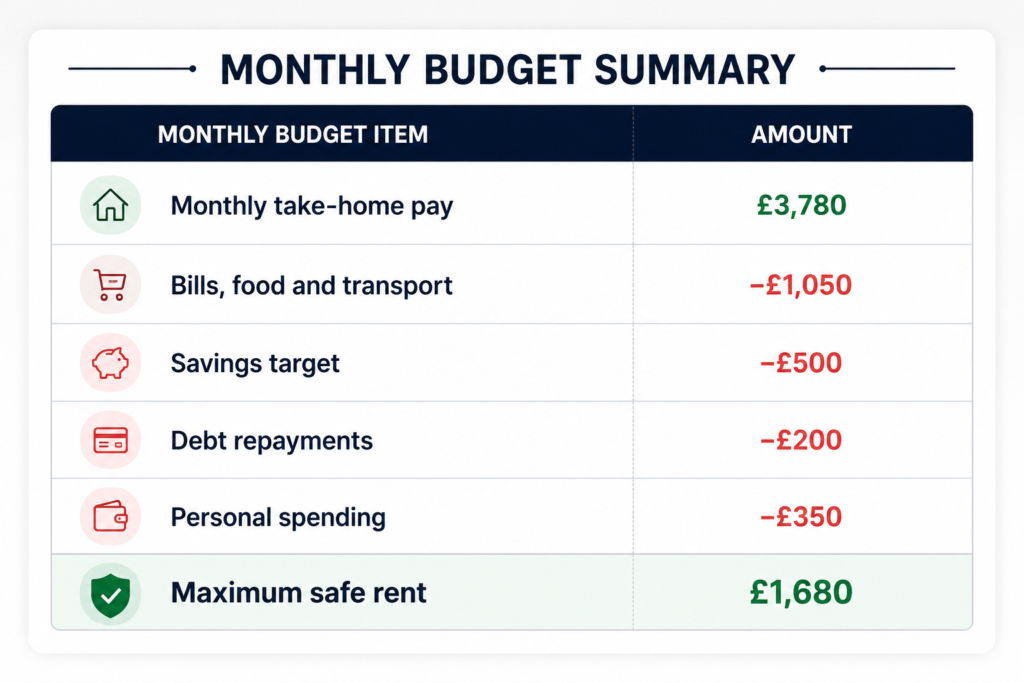
This means £1,680 may be the maximum safe rent in this example. However, choosing rent below your maximum usually gives you a stronger safety buffer.
Your maximum affordable rent should not be based on a perfect month where nothing goes wrong. Cars need repairs, appliances can break, energy bills can change and unexpected travel or household expenses can appear without warning. If choosing a £1,700 property leaves you with only £100 or £200 after your normal monthly spending, the rent may be too high even if you can technically pay it. A safer approach is to choose a rent level that still leaves a reasonable cash buffer every month after your essential costs and planned savings.
Read more:Rent Affordability Calculator London – How Much Rent Can You Afford in LondonIs £60,000 a good salary in the UK?
Yes, £60,000 is a strong salary in many parts of the UK. It can provide a comfortable lifestyle, especially outside London. Your actual financial comfort depends on rent, debts, household size, transport costs, and savings goals.
How much is £60,000 after tax per month in 2025/26?
For England, Wales and Northern Ireland, £60,000 per year gives an estimated take-home pay of around £3,780 per month after Income Tax and employee National Insurance. This assumes a standard tax code with no pension or student loan deductions.
Can I rent a flat on a £60,000 salary?
Yes. Many landlords may approve you for properties costing around £1,600 to £2,000 per month. However, a personal rent budget around £1,250 to £1,550 is usually more comfortable.
Can I afford £1,600 rent on a £60,000 salary?
Yes, £1,600 rent can be manageable. It takes around 42% of your monthly take-home pay, so it is best suited to someone with controlled spending, low debt, and stable employment.
Can I afford £2,000 rent on a £60,000 salary?
You may technically afford it, but it can be financially tight if you live alone and pay all bills yourself. It takes more than half of your take-home pay before council tax, utilities, and food are included.
What is 30% of a £60,000 salary?
Thirty percent of a £60,000 gross salary is £18,000 per year, or £1,500 per month. For personal budgeting, 30% of estimated take-home pay is more useful, which is around £1,134 per month.
What is 40% of a £60,000 salary?
Forty percent of a £60,000 gross salary is £24,000 per year, or £2,000 per month. Forty percent of estimated take-home pay is around £1,512 per month.
Should I include bills when calculating rent affordability?
Yes. Include council tax, energy, water, broadband, transport, food, insurance and debt repayments. The full monthly cost is more important than advertised rent alone.
How much should I save before renting?
A good target is enough to cover your holding deposit, security deposit, first month’s rent, moving costs and at least one month of emergency expenses. For many renters, this may mean saving between £4,000 and £7,000 before moving.
Is £60,000 a good salary for a single person renting alone?
Yes. On your own, £60,000 usually gives enough take-home pay to rent comfortably and still save, especially if you keep rent within the £1,250 to £1,550 range. Renting alone does mean covering all bills yourself, so your budget should account for that.
Does £60,000 rent affordability change if I have a student loan?
Yes. Student loan repayments come out of your pay before you receive it, which reduces your actual take-home income. Someone on Plan 2 or Plan 5 repaying 9% above the threshold could see their monthly take-home pay drop by £150–£300 or more, which lowers the safe rent budget accordingly.
How much rent can I afford on £60,000 with a pension contribution?
A typical 5% employee pension contribution (often matched by an employer) will reduce your take-home pay by roughly £150–£200 per month, depending on how it’s structured. This should be factored into your budget before deciding on a rent figure.
Final Thoughts
A £60,000 salary can support a comfortable rental lifestyle in most parts of the UK.
For 2025/26, estimated monthly take-home pay is around £3,780. A rent budget of approximately £1,250 to £1,550 per month is usually a good balance between a suitable home, regular savings, and financial security.
You may be able to spend £1,600 to £1,700 if your other costs are low. However, rent above £1,800 can make it harder to save, manage unexpected expenses, and maintain your lifestyle, particularly if you live alone.
The best rental property is not necessarily the most expensive one you can be approved for. It is the property that allows you to pay your bills, build savings, and remain financially stable if your circumstances change.