UK Tax Brackets 2026/27 – Income Tax Rates and Thresholds
Understanding UK tax brackets can help you estimate how much Income Tax you may pay on your earnings. The amount of tax you pay depends on your income, your Personal Allowance, and the tax band into which different portions of your income fall.
For the 2026/27 tax year, which runs from 6 April 2026 to 5 April 2027, the standard Personal Allowance is £12,570. This means most people can earn up to £12,570 before paying Income Tax.
UK Tax Brackets 2026/27 at a Glance
The following Income Tax rates apply to most taxpayers in England, Wales and Northern Ireland.
| Income | Tax Rate |
|---|---|
| Up to £12,570 | 0% |
| £12,571 to £50,270 | 20% |
| £50,271 to £125,140 | 40% |
| Over £125,140 | 45% |
It is important to remember that these rates do not mean your entire income is taxed at one rate. Instead, your income is divided between different tax bands.
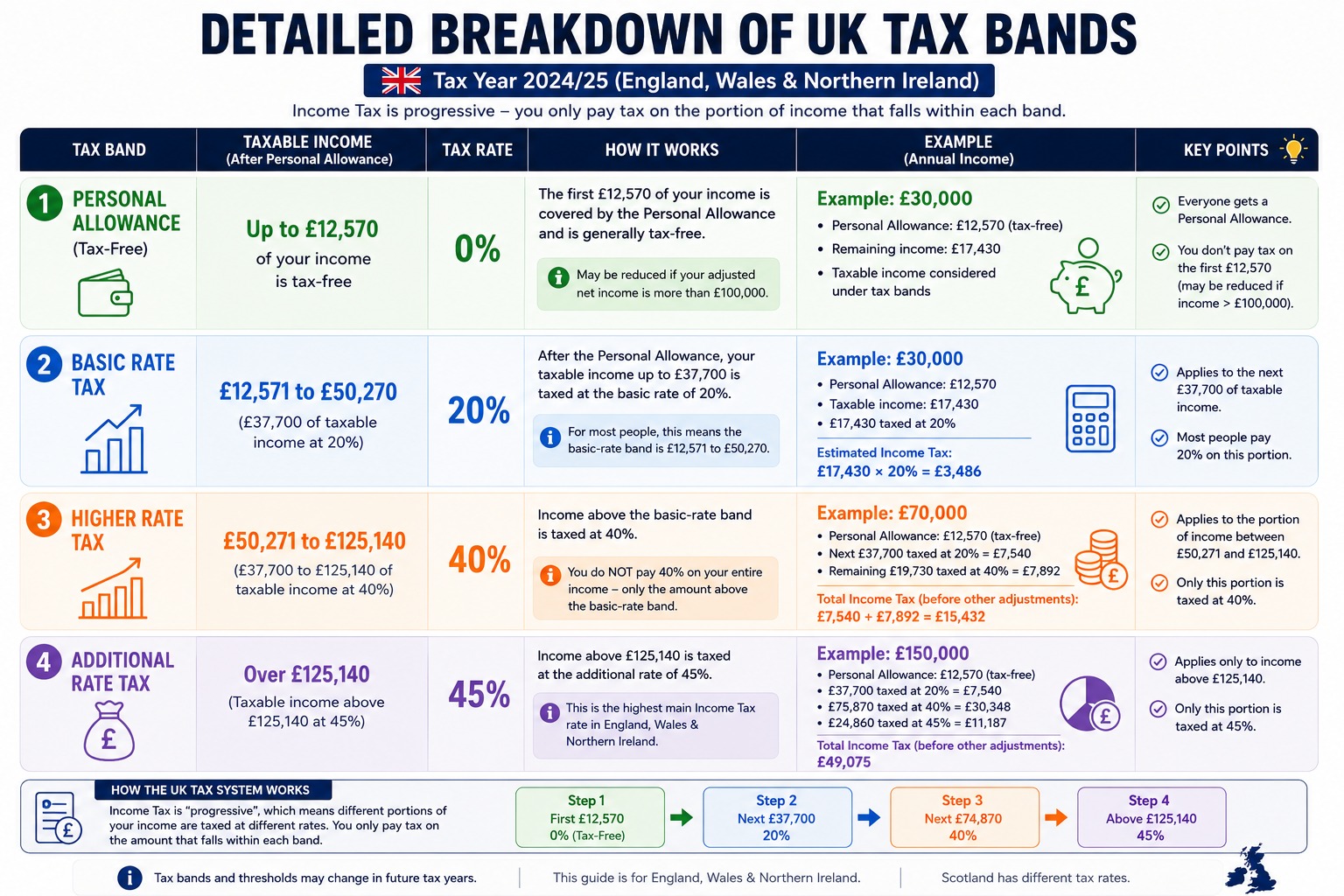
Detailed Breakdown of UK Tax Bands
1. Personal Allowance – 0%
The standard Personal Allowance for the tax year is £12,570. For many people, this portion of their income is tax-free.
• Annual income: £30,000
• Personal Allowance: £12,570
• Income remaining for Income Tax: £17,430
The first £12,570 is generally covered by the Personal Allowance, while the remaining taxable income is considered under the relevant tax bands.
Your Personal Allowance may be reduced if your adjusted net income is more than £100,000.
2. Basic Rate Tax – 20%
After your Personal Allowance, taxable income up to £37,700 is generally taxed at the basic rate of 20%.
For someone receiving the standard £12,570 Personal Allowance, this means the basic-rate income range is generally: £12,571 to £50,270.
• £12,570 may be covered by your Personal Allowance
• £17,430 is taxable
• That taxable income falls within the basic-rate band
Estimated Income Tax before considering other adjustments or reliefs:
£17,430 × 20% = £3,486
3. Higher Rate Tax – 40%
Taxable income above the basic-rate band may be taxed at 40%.
For a person receiving the standard Personal Allowance, the higher-rate threshold generally begins once total income exceeds £50,270. The higher-rate band applies to taxable income from £37,701 to £125,140.
• The Personal Allowance may cover the first £12,570
• The next £37,700 may be taxed at 20%
• The remaining taxable income may fall into the 40% higher-rate band
You do not pay 40% on your entire £70,000 salary. Only the portion of your income that falls within the higher-rate band is taxed at 40%.
4. Additional Rate Tax – 45%
Income above £125,140 is generally taxed at the additional rate of 45%. This is the highest main Income Tax rate for taxpayers in England, Wales and Northern Ireland.
Again, the 45% rate only applies to the portion of taxable income above the additional-rate threshold.
UK Tax Brackets Example (£60,000 Salary)
Let's look at a simplified example using an annual income of £60,000.
| Portion of Income | Tax Rate |
|---|---|
| First £12,570 | 0% |
| Next £37,700 | 20% |
| Remaining £9,730 | 40% |
Estimated calculation:
• Basic-rate tax: £37,700 × 20% = £7,540
• Higher-rate tax: £9,730 × 40% = £3,892
Estimated Total Income Tax: £11,432
This is a simplified example. Your actual tax bill may be different depending on factors such as pension contributions, tax relief, other income, benefits, and your individual tax circumstances.
What Happens If You Earn More Than £100,000?
Your Personal Allowance is reduced when your adjusted net income is above £100,000.
For every £2 of income above £100,000, your Personal Allowance is reduced by £1.
- Income of £100,000: Standard Personal Allowance (£12,570) applies.
- Income of £110,000: Personal Allowance is reduced by £5,000 (to £7,570).
- Income of £125,140 or more: The standard Personal Allowance is fully reduced to £0.
This means the effective tax position between £100,000 and £125,140 creates a 60% marginal tax trap before moving into the 40% and 45% bands.
Scottish Tax Brackets 2026/27
Income Tax bands are different for Scottish taxpayers on non-savings and non-dividend income.
For the 2026/27 tax year, Scottish Income Tax rates are:
| Income Range | Scottish Tax Rate |
|---|---|
| £12,571 to £16,537 | 19% (Starter Rate) |
| £16,538 to £29,526 | 20% (Basic Rate) |
| £29,527 to £43,662 | 21% (Intermediate Rate) |
| £43,663 to £75,000 | 42% (Higher Rate) |
| £75,001 to £125,140 | 45% (Advanced Rate) |
| Over £125,140 | 48% (Top Rate) |
These thresholds assume the individual receives the standard UK Personal Allowance of £12,570.
If you are a Scottish taxpayer, your Income Tax calculation may therefore be different from someone living in England, Wales or Northern Ireland.
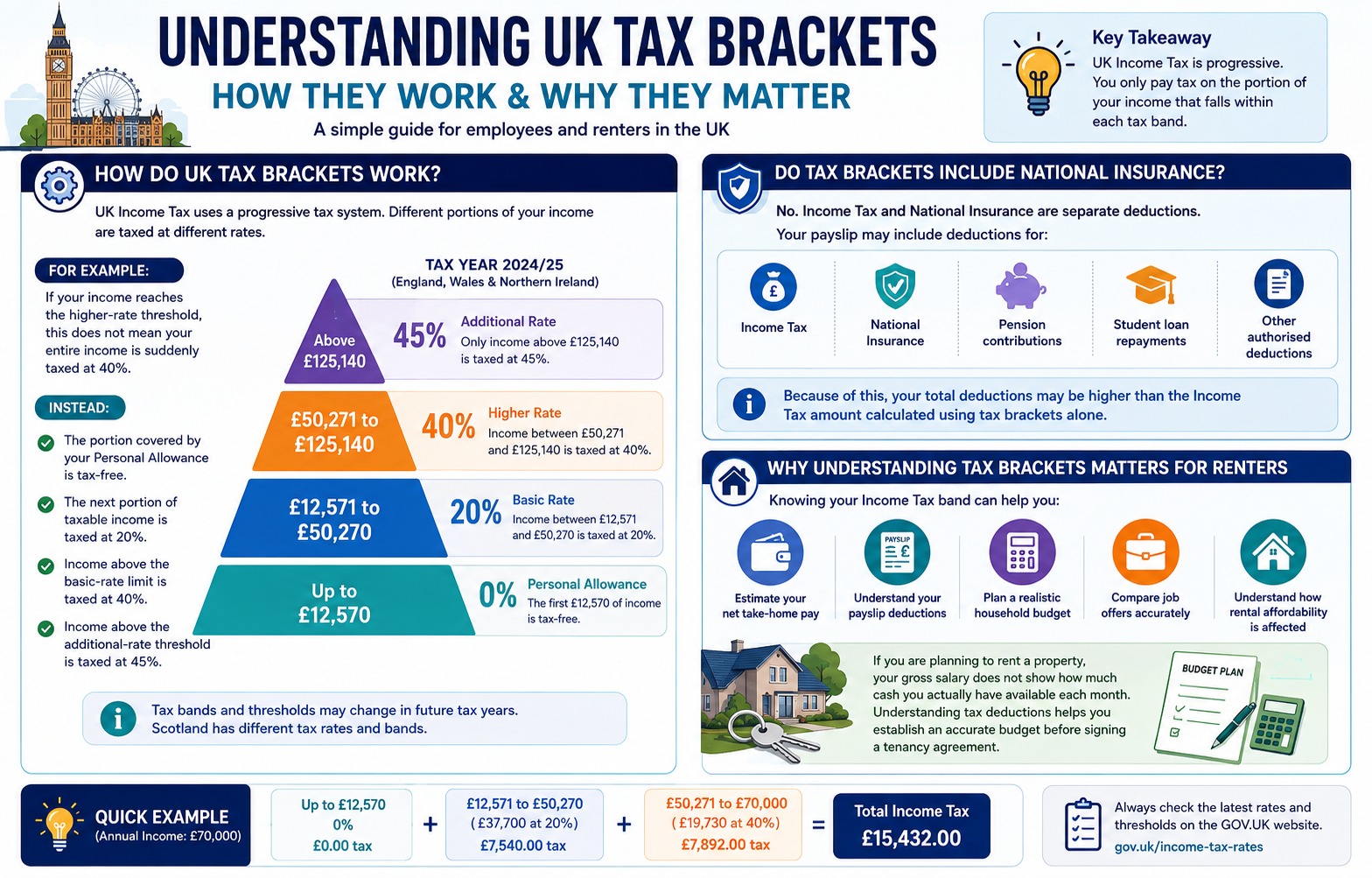
How Do UK Tax Brackets Work?
UK Income Tax uses a progressive tax system. This means that different portions of your income can be taxed at different rates.
For example, if your income reaches the higher-rate threshold, this does not mean your entire income is suddenly taxed at 40%.
Instead:
- The portion covered by your Personal Allowance is tax-free.
- The next portion of taxable income is taxed at 20%.
- Income above the basic-rate limit is taxed at 40%.
- Income above the additional-rate threshold is taxed at 45%.
Do Tax Brackets Include National Insurance?
No. Income Tax and National Insurance are separate deductions.
Your payslip may include deductions for:
- Income Tax
- National Insurance
- Pension contributions
- Student loan repayments
- Other authorised deductions
Because of this, your total deductions may be higher than the Income Tax amount calculated using tax brackets alone.
Why Understanding Tax Brackets Matters for Renters
Knowing your Income Tax band can help you:
- Estimate your net take-home pay
- Understand your payslip deductions
- Plan a realistic household budget
- Compare job offers accurately
- Understand how rental affordability is affected
If you are planning to rent a property, your gross salary does not show how much cash you actually have available each month. Understanding tax deductions helps you establish an accurate budget before signing a tenancy agreement.
Frequently Asked Questions
The standard Personal Allowance is £12,570. This is the amount of income most people can receive before paying Income Tax.
For England, Wales and Northern Ireland, the basic Income Tax rate is 20% on taxable income within the basic-rate band (£12,571 to £50,270).
You pay the higher rate of 40% on the portion of your taxable income above £50,270 up to £125,140.
No. UK Income Tax is progressive. Only the portion of income that falls within a higher tax band is taxed at that higher rate — lower portions are still taxed at lower rates.
For England, Wales and Northern Ireland, income above £125,140 is taxed at the additional rate of 45%.
Yes. Scotland has its own Income Tax bands and rates for non-savings and non-dividend income, featuring six tax bands instead of four.
No. National Insurance is a separate statutory deduction calculated using different rates and rules.
Your Personal Allowance is reduced by £1 for every £2 of income above £100,000. It reaches £0 once income reaches £125,140.
Around £12,570 is covered tax-free by your Personal Allowance. The remaining £37,430 falls into the basic rate band (20%), resulting in an estimated Income Tax bill of £7,486.
Yes. Your net income after Income Tax and National Insurance determines your actual spending power for monthly rent and household utilities.
Final Thoughts
The UK tax brackets for 2026/27 can help you understand how Income Tax is calculated on different portions of your income. Most taxpayers receive a £12,570 Personal Allowance, followed by different tax rates as their taxable income increases.
However, your actual tax bill can depend on your individual circumstances, including pension contributions, other sources of income, tax reliefs, and your location within the UK.
Understanding your Income Tax makes it easier to calculate your expected take-home pay and build a realistic monthly budget when planning your living costs and rent.