
First Month Rent Calculator UK helps you estimate the total upfront cost of moving into a new rental property before you collect the keys. Moving into a new rental property is amazing, but it’s important to understand the costs you will incur before collecting the keys. Many first-time renters assume they will only need to pay the first month’s rent. In reality, there are often additional upfront costs such as a rental agreement, advance payments, holding deposit payments, and moving costs.
Our First Month Rent Calculator UK helps you calculate the total amount you will need before moving into your new home. Simply enter your monthly cost and any additional costs to get a quick calculation of your upfront payment.
If you are renting your first apartment, moving to another city, or planning your monthly financial plan, this calculator makes it easy to understand your financial commitment before signing a rental agreement.
What Is First Month’s Rent?
| Section | Content |
|---|---|
| What Is the First Month’s Rent? | The first month’s rent is the initial rental payment you make to your property owner or letting broker before your rental agreement formally begins. It is one of the most important Advance costs when renting a property and is normally required before you are given the keys and accepted to move into your new home. |
| What Does It Cover? | This payment covers the first month of your rental agreement, allowing you to legally inhabit the property from the agreed start date. The exact due date is usually stated in your rental agreement, and most property owners require the payment to be made before the move-in date. |
Why Do You Pay the First Month’s Rent?
The first month’s rent is collected to:
- Secure the start of your rental agreement and confirm your move-in date.
- Pay for your first month of living in the property.
- Activate your rental agreement, allowing you to take Ownership of the property.
- Meet the payment terms accepted by your property owners or letting broker.
Is the First Month’s Rent Refundable?
| Section | Content |
|---|---|
| Is the First Month’s Rent Refundable? | Unlike an advance payment under a rental agreement, the first month’s rent is generally not refundable because it pays for your use of the property during the first rental period. Once your tenancy has started and you have moved in, this payment is thought of as rent rather than an advance payment. |
| When Could a Refund Apply? | But if your rental agreement does not begin due to a condition covered by your agreement, any refund will depend on the specific terms and conditions set out in your rental agreement contract. |
Click Here:Monthly Rent Budget Calculator UK
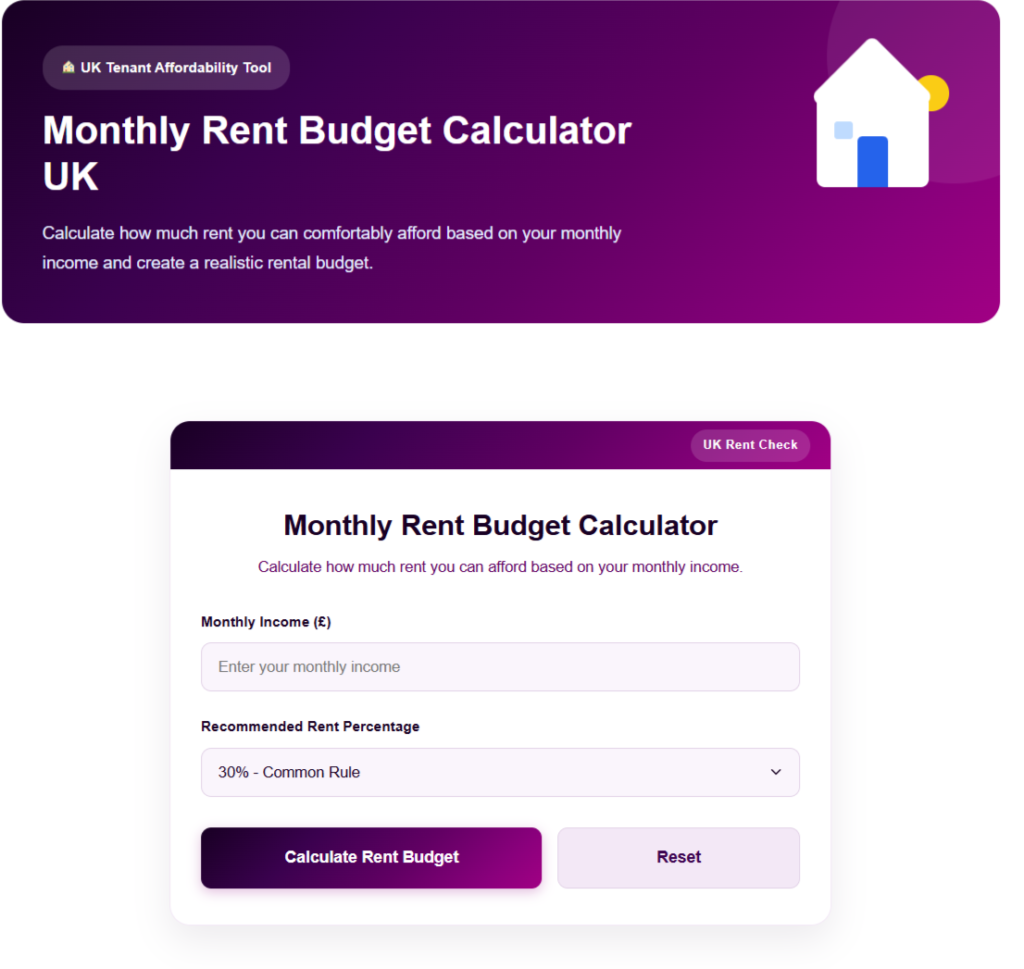
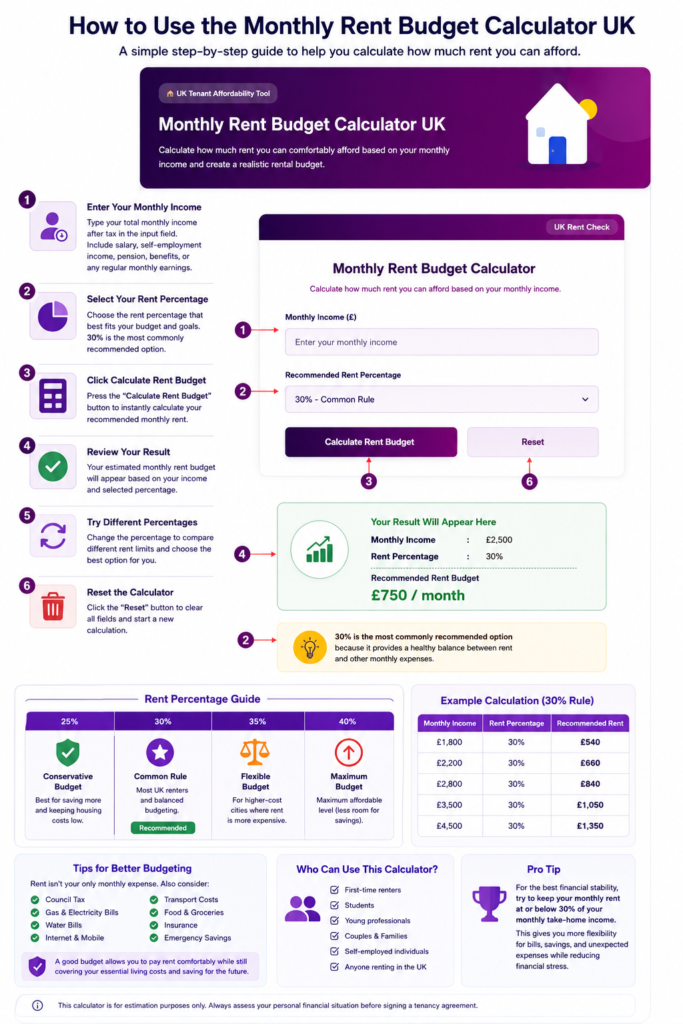
How to Use the Monthly Rent Budget Calculator UK
First Month’s Rent vs Tenancy Deposit
It’s common for first-time renters to confuse the first month’s rent with the rental agreement deposit, but they serve different purposes:
- First Month’s Rent: Pays for your first month of possession of the property.
- Tenancy Deposit: A Repayable security advance payment held to cover potential property damage, unpaid rent, or breaches of the rental agreement, subject to the terms of the rental agreement.
Understanding this difference can help you financially plan more effectively and know exactly what each payment is for before moving into your new home.
What Costs Are Usually Paid Before Moving In?
| Topic | Details |
|---|---|
| Total Advance Amount Before Moving In | Before you move into a rental property, you will usually need to pay more than just the first month’s rent. The total advance amount can include several different costs, depending on your tenancy agreement and the Property owner’s requirements. Understanding these costs in advance can help you financially plan accurately and avoid unexpected financial surprises. |
Read more:How to Calculate Your Final Degree Classification in the UKCommon Upfront Costs
Most tenants may be required to pay some or all of the following:
- First month’s rent
- Rental agreement Advance payment (security deposit)
- Holding Advance payment (usually deducted later)
- Advance rent (if requested)
- Moving costs
- Utility setup charges
- Broadband installation fees
- Contents insurance (optional)
| Total Moving Cost Formula | |
|---|---|
| Total Moving Cost = | First Month’s Rent |
| + Tenancy Deposit | |
| + Advance Rent (if applicable) | |
| + Moving Costs | |
| + Utility Setup Fees | |
| + Broadband Installation | |
| + Contents Insurance (optional) | |
| − Holding Deposit (if already paid and deducted) |
Example 1 – Basic Upfront Costs
Suppose you’re renting a property with:
- First Month’s Rent: £900
- Tenancy Deposit: £1,038.46
- Holding Deposit Already Paid: £207.69
Calculation:
£900
+ £1,038.46
− £207.69
= £1,730.77
Total Amount Due Before Moving In: £1,730.77
Read more:How Much Rent Can I Charge in the UK? Proven Rent Pricing Guide for Landlords 2026| Example 2 – Including Moving Expenses | |
|---|---|
| Let’s assume the following costs: | |
| First Month’s Rent | £1,200 |
| Tenancy Deposit | £1,384.62 |
| Holding Deposit Paid | £276.92 |
| Removal Van | £180 |
| Utility Setup | £75 |
| Broadband Installation | £40 |
| Contents Insurance | £15 |
| Calculation: | |
| Total | £1,200 + £1,384.62 + £180 + £75 + £40 + £15 − £276.92 = £2,617.70 |
| Estimated Total Moving Cost | £2,617.70 |
Example 3 – Advance Rent Requested
Some landlords may ask for advance rent, especially if you’re self-employed, have limited credit history, or don’t have a guarantor.
Suppose you need to pay:
- First Month’s Rent: £950
- One Additional Month’s Rent in Advance: £950
- Tenancy Deposit: £1,096.15
- Holding Deposit Paid: £219.23
Calculation:
£950
+ £950
+ £1,096.15
− £219.23
= £2,776.92
Total Upfront Payment: £2,776.92
| Why Do These Costs Vary? | |
|---|---|
| Explanation | Not every tenancy includes all of these expenses. The total amount you’ll need depends on factors such as: |
| Monthly rent | The monthly rent of the property. |
| Tenancy deposit | Whether a tenancy deposit is required. |
| Holding deposit | Whether you’ve already paid a holding deposit. |
| Rent in advance | Whether the landlord requests rent in advance. |
| Moving and setup expenses | Your moving and setup expenses. |
| Optional services | Optional services such as contents insurance. |
Using our First Month Rent Calculator UK lets you add these costs and instantly estimate how much you’ll need before moving into your new home.
What If You Can Afford the Rent but Not the Upfront Cost?
It is possible to afford the monthly rent but still struggle with the amount required before moving in. This can happen when the first month’s rent and tenancy deposit need to be paid at the same time.
If this happens, do not look only at the monthly rent. First calculate the complete upfront amount and compare it with the money you currently have available. You can then decide whether you need more time to save, reduce optional moving expenses, or discuss the payment arrangements with the landlord or letting agent.
Using a calculator before making an application can help you identify this gap early. It is better to understand the full cost before committing to a property than to discover that you cannot comfortably cover the move after the tenancy has been agreed.
Read more:Ultimate 30x Rent Rule UK Guide – What It Means and How Letting Agents Calculate AffordabilityFirst Month Rent Calculator Formula
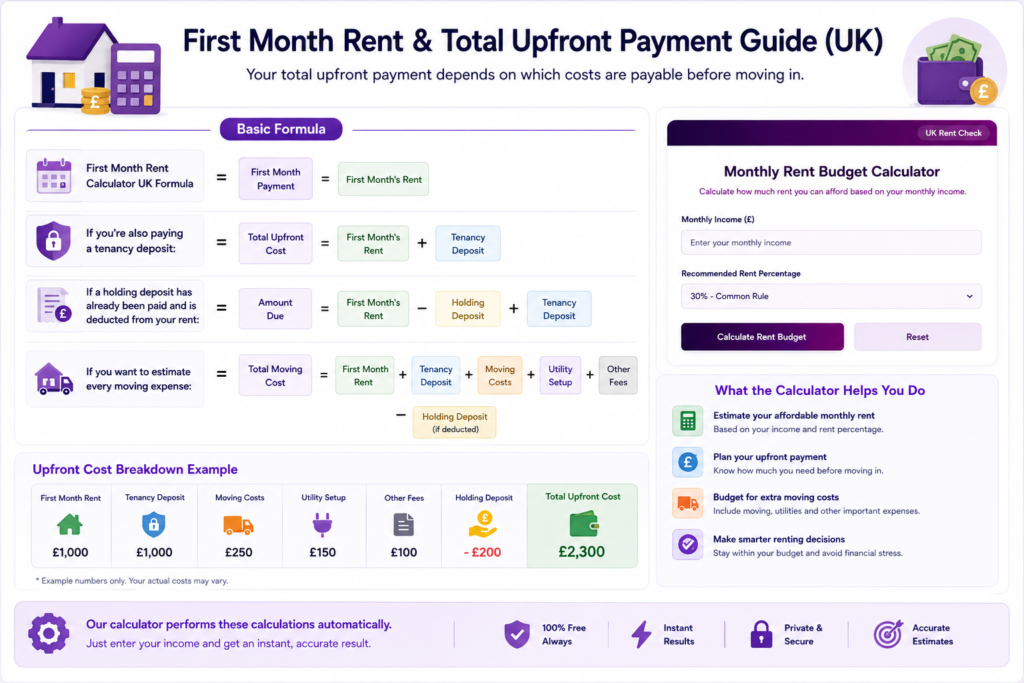
Your total upfront payment depends on which costs you must pay before moving in.
Basic Formula
First Month Rent Calculator UK Formula
First Month Payment = First Month’s Rent
If you’re also paying a tenancy deposit:
Total Upfront Cost = First Month’s Rent + Tenancy Deposit
If a holding deposit has already been paid and is deducted from your rent:
Amount Due = (First Month’s Rent − Holding Deposit) + Tenancy Deposit
If you want to estimate every moving expense:
Total Moving Cost =
First Month’s Rent
+ Tenancy Deposit
+ Moving Costs
+ Utility Setup
+ Other Fees
− Holding Deposit (if deducted)
Our calculator performs these calculations automatically.
| Why Is a Holding Deposit Deducted? | |
|---|---|
| Explanation | A holding advance payment is paid to reserve a rental property while the property owner or letting broker completes a background check, Financial capacity checks, and prepares the rental agreement. Once your application is successful and the rental agreement goes ahead, the holding advance payment is usually credited towards your upfront payments rather than being charged as an additional fee. |
| In many cases, the holding deposit is deducted from either: | |
| First month’s rent | Your first month’s rent, reducing the amount you need to pay before moving in. |
| Tenancy deposit (security deposit) | Your tenancy deposit (security deposit), lowering the total advance payment you need to provide at the start of the rental agreement. |
Why Is It Deducted?
The purpose of deducting the holding deposit is to ensure you are not paying the same amount twice. Since you’ve already paid money to reserve the property, that payment is generally applied to one of your initial tenancy costs once the tenancy agreement is completed.
Example
Suppose you have:
- Monthly Rent: £1,000
- Holding Deposit Paid: £230.77
If the holding deposit is deducted from your first month’s rent, you’ll only need to pay:
£1,000 − £230.77 = £769.23
So, instead of paying the full £1,000, you would pay £769.23, as you’ve already contributed £230.77 when reserving the property.
Check Your Tenancy Agreement
Although holding deposits are commonly deducted from your first month’s rent or tenancy deposit, the exact arrangement depends on the terms agreed with your landlord or letting agent. Before making any payment, carefully read your tenancy agreement or holding deposit agreement to understand how your deposit will be applied and whether any conditions affect its refund or deduction.
Read more:Rent Affordability Calculator London – How Much Rent Can You Afford in London?| Example 1 – First Month Rent Only | |
|---|---|
| Monthly Rent | £850 |
| Calculation | First Month Rent = £850 |
| Total to Pay | £850 |
Example 2 – Rent + Tenancy Deposit
Monthly Rent:
£1,000
Tenancy Deposit:
£1,150
Calculation:
£1,000 + £1,150
= £2,150
Total Before Moving:
£2,150
Example 3 – Holding Deposit Already Paid
| Example – Holding Deposit Deducted from First Month’s Rent | |
|---|---|
| Monthly Rent | £1,200 |
| Holding Deposit | £276.92 |
| Tenancy Deposit | £1,384.62 |
| Calculation | |
| First Month’s Rent | £1,200 |
| − Holding Deposit | £276.92 |
| = Amount Due for First Month’s Rent | £923.08 |
| + Tenancy Deposit | £1,384.62 |
| = Total Due | £2,307.70 |
| Amount Required Before Moving | £2,307.70 |
Example 4 – Including Moving Costs
Monthly Rent:
£950
Tenancy Deposit:
£1,096.15
Moving Van:
£180
Utility Setup:
£60
Calculation:
950
+ 1,096.15
+ 180
+ 60
= £2,286.15
Estimated Moving Cost:
£2,286.15
Example 5 – Full Cost Breakdown
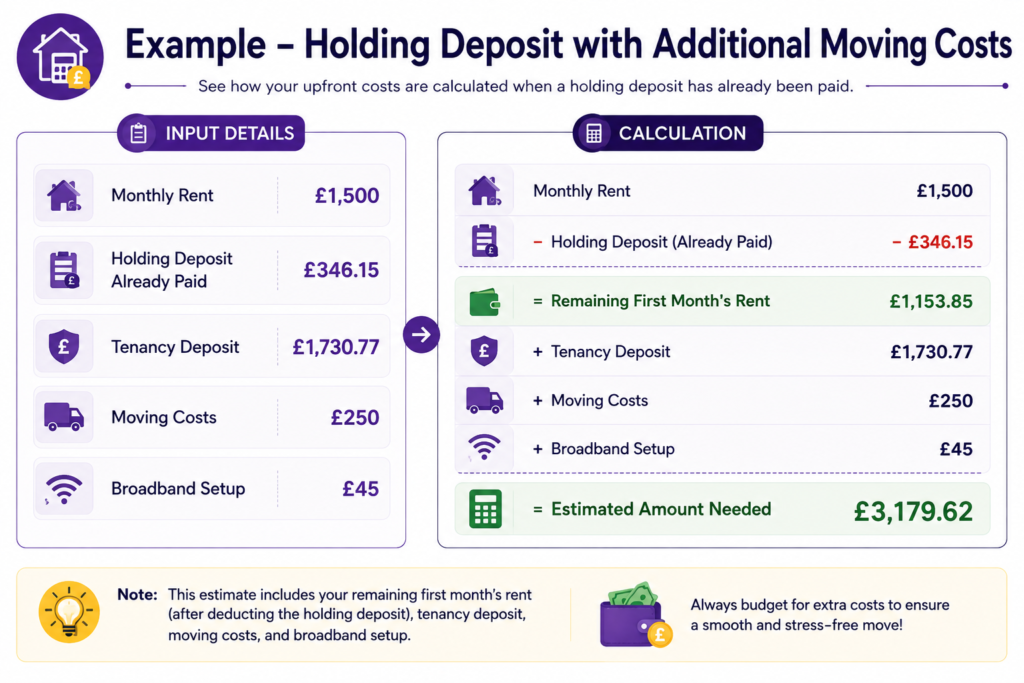
| Example – Holding Deposit with Additional Moving Costs | |
|---|---|
| Monthly Rent | £1,500 |
| Holding Deposit Already Paid | £346.15 |
| Tenancy Deposit | £1,730.77 |
| Moving Costs | £250 |
| Broadband Setup | £45 |
| Calculation | |
| Monthly Rent | £1,500 |
| − Holding Deposit | £346.15 |
| = Remaining First Month’s Rent | £1,153.85 |
| + Tenancy Deposit | £1,730.77 |
| + Moving Costs | £250 |
| + Broadband Setup | £45 |
| = Estimated Amount Needed | £3,179.62 |
Read more:Rent vs Buy Calculator UK – Should You Rent or Buy a HomeEstimated Upfront Costs Table
| Monthly Rent | First Month Rent | Estimated Tenancy Deposit (5 Weeks) | Estimated Total Upfront* |
| £700 | £700 | £807.69 | £1,507.69 |
| £800 | £800 | £923.08 | £1,723.08 |
| £900 | £900 | £1,038.46 | £1,938.46 |
| £1,000 | £1,000 | £1,153.85 | £2,153.85 |
| £1,200 | £1,200 | £1,384.62 | £2,584.62 |
| £1,500 | £1,500 | £1,730.77 | £3,230.77 |
| £2,000 | £2,000 | £2,307.69 | £4,307.69 |
*Excludes optional moving expenses and assumes a tenancy deposit of five weeks’ rent where applicable.
Why Should You Calculate Your First Month’s Rent?
Calculating your first month’s cost before approving a rental agreement helps you understand the full financial Responsibility of renting a property. Rather than being surprised by advance costs, you can prepare your Financial plan in advance and make informed decisions about which property best matches your money.
Budget More Effectively
Learning your first month’s cost and other advance costs makes it possible for you to create a practical Financial plan. This helps you manage your money and confirms you have enough money available before moving into your new home.
| Benefit | Description |
|---|---|
| Avoid Unexpected Expenses | Many renters focus only on the monthly cost and forget about additional costs such as the rental agreement advance payment, moving costs, Utility connection fees, and Internet service installation. Calculating these costs in advance helps you avoid unplanned financial surprises. |
| Compare Different Rental Properties | If you are thinking about multiple rental properties, calculating the total advance cost for each one makes it easier to compare your options. You may find that a property with A little higher rent offers better overall value or lower additional costs. |
| Plan Your Savings | Understanding how much money you will need before moving Permits you to set practical savings goals. Whether you are moving next month or several months from now, planning makes it easier to build the funds required. |
Know Exactly How Much You’ll Need Before Moving Day
Moving into a rental property regularly requires more than just paying the first month’s rent. By calculating your total advance costs, you will know exactly how much you will need for rent, advance payment, and other important costs before collecting the keys.
Reduce Financial Stress
Having a clear estimate of your moving costs provides peace of mind. On the other hand, instead of stressing about unplanned payments, you can focus on preparing for your move and moving into your new home with confidence.
Make Better Financial Decisions
A clear understanding of your rental costs helps you decide whether a property matches your financial plan. This reduces the risk of taking on financial Responsibilities that may be difficult to manage in the future.
How Much Money Should You Have Ready Before Moving?
Before moving into a rental property, it is useful to look beyond the monthly rent and calculate the amount you will actually need on moving day. Your available budget should normally cover the first month’s rent, any tenancy deposit, moving expenses, and essential household setup costs.
For example, if your monthly rent is £1,000 and your tenancy deposit is £1,150, you may need £2,150 before adding removal costs, broadband, utility setup, or other expenses. If you have already paid a holding deposit, check whether it will be deducted from your first rent payment or tenancy deposit.
A simple way to plan is to create a moving-in budget before agreeing to the tenancy. List every expected payment separately rather than looking only at the advertised monthly rent. This gives you a clearer idea of whether you can comfortably afford the move without using money needed for your normal monthly expenses.
Tips for Reducing Moving Costs
Changing your home location can be costly, but these tips can help you save money:
Compare Removal Companies
Get multiple quotes before booking a moving service. Compare not only the price but also what is included, such as Protective packing materials, protection, separating furniture components, and fuel charges. Reading Client reviews can also help you choose a Dependable company that provides good value for money.
Move During Off-Peak Periods
Weekdays and mid-month dates are regularly lower than weekends or month-end moves. If your moving date is Adaptable, booking outside the most High-activity periods can greatly reduce removal costs and give you more choice of Services provided
Declutter Before Moving
Selling or giving unwanted items can reduce moving costs. The smaller the property you need to move, the less you may pay for removal Solutions. You could also earn extra money by offering furniture, clothes, or household Products you no longer need for sale.
| Tip | Description |
|---|---|
| Ask About Deposit Deductions | Check whether your holding deposit will be deducted from your first rent or tenancy deposit. Understanding how your deposits are handled can help you avoid paying more upfront than necessary and improve your moving budget. |
| Create a Moving Budget | Include rent, advance payment, travel, Essential service connections, furniture, and emergency costs. Having a detailed financial plan before moving helps you prepare for expected costs while leaving room for unplanned costs that often take place during the moving process. |
| Pack Your Belongings Yourself | Packing your own Products As a replacement for paying for a full packing service can save a great amount of money. Start packing early, use Strong packaging boxes, and clearly mark everything to make the process smoother. |
| Use Free or Recycled Packing Materials | As a replacement for buying brand-new moving boxes, ask local supermarkets, friends, or family members for spare boxes. You can also use towels, blankets, and clothing to protect easily damaged products as a replacement for purchasing expensive packing supplies. |
| Transfer Utilities in Advance | Arrange your gas, electricity, water, Internet connection, and local tax accounts before moving day. Planning helps protect against Unrequired connection fees, service delays, or paying for Essential services at both properties. |
Avoid Last-Minute Bookings
Booking removal services well in advance regularly results in better prices and more Supply. Last-minute bookings can be more costly, especially during busy moving periods.
Keep an Emergency Fund
Additionally, with careful planning, unplanned costs can come about, such as additional cleaning fees, parking permits, or replacement household items. Keeping a small emergency savings account can reduce financial pressure during your move.
Moving-In Cost Checklist
Before moving into your new rental property, check each expected cost and record the amount. A simple checklist can help prevent small expenses from being forgotten.
- First month’s rent
- Tenancy deposit
- Holding deposit already paid
- Additional rent in advance, if applicable
- Removal or transport costs
- Utility setup or connection costs
- Broadband installation
- Essential household items
- Contents insurance, if required
- A small amount for unexpected expenses
Once you have listed these costs, subtract any payment that has already been made and calculate the amount still required before moving day. You can use the First Month Rent Calculator UK to make this calculation easier and compare different rental options.
Read more:Guarantor for Renting in the UK –7 Best Essential GuideBenefits of Using Our First Month Rent Calculator UK
Our First Month Rent Calculator UK is designed to help renters understand the true cost of moving into a rental property. In place of guessing how much money you will need, the calculator provides a quick and exact calculation of your upfront cost, making it easier to plan your money.
Estimate Your Upfront Rental Costs Instantly
Simply enter your monthly rent and any additional costs to instantly calculate how much you’ll need before moving into your new home. This saves time and provides a clear picture of your initial expenses.
Include Deposits and Moving Expenses
The calculator doesn’t just estimate your first month’s rent. You can also factor in costs such as your rental agreement deposit, holding advance payment, removal services, utility setup fees, and other moving expenses to get a more practical total.
Avoid Manual Calculations
There’s no need to calculate everything yourself using Complex formulas. The calculator naturally works out your calculated costs, reducing the risk of mistakes and saving Important time.
Budget Before Signing a Tenancy Agreement
Learning your unplanned advance costs helps you create a practical financial plan before accepting a rental property. This allows you to avoid unplanned financial pressure when it’s time to move.
Compare Multiple Rental Properties
If you are deciding between a number of properties, the calculator makes it easy to compare the total moving costs for each one. This helps you choose a property that best suits your financial plan.
Plan Your Finances with Confidence
By understanding exactly how much you will need to pay before moving in, you can save money in advance, manage your money, and reduce stress during the moving process.
Understand Your Total Moving Budget
Moving involves more than just paying rent. The calculator provides a complete calculation of your expected cost, helping you prepare for advance payment, moving costs, utility connections, and other essential fees.

What is the first month’s rent?
The first month’s rent is the initial rental payment you make before moving into a property. It covers your first month of occupancy and is usually paid before you receive the keys.
Is the first month’s rent refundable?
No. The first month’s rent is payment for living in the property during the first rental period, so it is generally not refundable once your tenancy has started.
Do I pay the tenancy deposit as well?
Usually, yes. Most tenants are required to pay both the first month’s rent and a tenancy deposit before moving into the property. The tenancy deposit is separate from your rent and is intended to cover potential damage or unpaid rent.
Is the holding deposit included?
In many cases, the holding deposit you previously paid is deducted from either your first month’s rent or your tenancy deposit. Always check your tenancy agreement to see how it will be applied.
Can I include moving costs?
Yes. Our First Month Rent Calculator can help you estimate additional expenses such as removal services, packing materials, utility setup fees, broadband installation, and other moving-related costs.
How much money should I save before renting?
A good rule is to budget for your first month’s rent, tenancy deposit, moving expenses, utility connection fees, and an emergency fund for unexpected costs.
When do I have to pay the first month’s rent?
The first month’s rent is usually due before your tenancy officially begins. Most landlords or letting agents require payment before handing over the keys to the property.
Can I pay the first month’s rent in instalments?
This depends on the landlord or letting agent. While some may agree to a payment plan in exceptional circumstances, most require the full amount to be paid before the tenancy starts.
Does the first month’s rent include utility bills?
Not always. Whether bills such as electricity, gas, water, internet, or council tax are included depends on your tenancy agreement. Always confirm what is included before signing the contract.
What happens if I move in halfway through the month?
If your tenancy starts partway through a rental period, your landlord may charge a pro-rata rent, meaning you only pay for the days you occupy the property during that period. After that, you’ll usually move onto the standard monthly payment schedule.
Final Thoughts
Understanding your first month’s rent is only part of preparing for a new rental agreement. Most renters also need to budget for a rental agreement advance payment, possible holding advance payment adjustments, and other moving costs before they can move into their new home.
Our First Month Rent Calculator UK makes this process simple by helping you calculate your total advance costs in just a few seconds. If you are renting your first property or moving to a new home, learning exactly how much you will need can help you plan, avoid surprises, and move with confidence.