Rental Deposit Calculator UK
Our Rental Deposit Calculator UK helps you estimate how much money you'll need before moving into a rented property. Simply enter your monthly rent, choose the deposit rule, holding deposit, advance rent, and any additional moving costs to instantly see your estimated upfront payment.
What is a Rental Deposit Calculator
Moving into a rented property usually requires more than just paying the first month's rent. Most tenants are asked to pay several upfront costs before receiving the keys.
Our Rental Deposit Calculator estimates.
Rental Deposit
Holding Deposit
Advance Rent
Weekly Rent
Total Upfront Moving Cost
Additional Moving Expenses
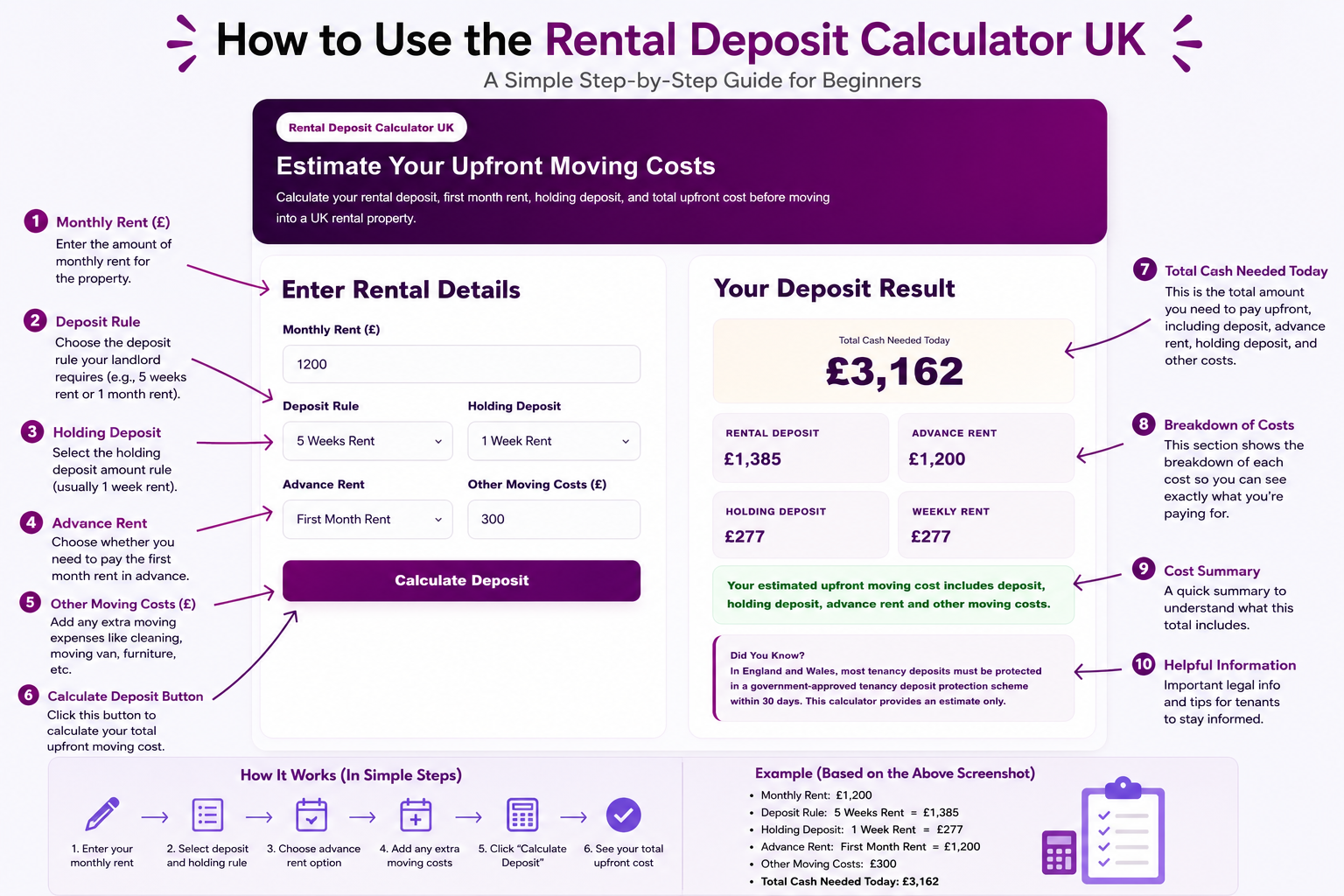
How to Use the Rental Deposit Calculator
Calculate Your Upfront Moving Costs in Minutes
Enter your monthly rent.
Choose your tenancy deposit rule (for example, 5 weeks' rent).
Select the holding deposit option.
Choose how much advance rent you'll pay.
Add any extra moving expenses such as removals or cleaning.
Click Calculate Deposit to view your complete moving cost estimate instantly.
What the Calculator Shows
After entering your details, you'll receive an easy-to-understand breakdown including:
Estimated tenancy deposit based on your selected rule.
Amount commonly paid to reserve the property.
Usually the first month's rent or any selected advance payment.
Weekly equivalent of your monthly rent.
The estimated amount you'll need before moving into the property.
Why Calculate Your Rental Deposit?
Many renters only budget for monthly rent, but moving into a property often involves several upfront payments.
Using this calculator helps you.
Plan your moving budget
Avoid unexpected costs
Compare different rental properties
Estimate the cash you'll need before moving
Prepare financially before applying
Typical Upfront Rental Costs in the UK
Most tenants may need to budget for:
Tenancy Deposit
Holding Deposit
First Month's Rent
Removal Costs
Cleaning Costs
Furniture or Appliances
Utility Setup Costs
Internet Installation
Example Calculation
| Item | Amount |
|---|---|
| Monthly Rent | £1,200 |
| Deposit Rule | 5 Weeks |
| Rental Deposit | £1,385 |
| Holding Deposit | £277 |
| Advance Rent | £1,200 |
This example shows how quickly upfront costs can add up before moving into a rental property.
Deposit Rules Explained
Different landlords may ask for different deposit amounts depending on the tenancy agreement.
5 Weeks Rent
The most common option for many private rentals.
6 Weeks Rent
May apply to certain higher-value tenancies or specific agreements.
The calculator lets you compare different deposit rules instantly.
Who Can Use This Calculator?
Our Rental Deposit Calculator UK is designed for anyone planning to rent a property and wanting a clear estimate of the upfront costs involved before moving in. Whether you're a first-time renter trying to understand your initial expenses, a student preparing for accommodation, a working professional relocating for work, a couple or family moving into a new home, or a group of friends renting a shared property, this calculator can help you budget more effectively.
By estimating your rental deposit, holding deposit, advance rent, and other moving expenses, it gives you a better understanding of how much money you'll need before signing a tenancy agreement. No matter where you're renting in the UK, this calculator provides a quick and convenient way to plan your finances and move into your new home with greater confidence.
Holding Deposit Explained
A holding deposit is a payment made to reserve a rental property while the landlord or letting agent carries out reference checks, affordability assessments, and prepares the tenancy agreement. Paying a holding deposit usually means the property is taken off the market for an agreed period, giving both parties time to complete the application process.
In many cases, the holding deposit is deducted from your first month's rent or tenancy deposit if your application is successful and the tenancy goes ahead. However, the exact terms and conditions depend on the tenancy agreement and the landlord's or letting agent's policies.
It's important to read the holding deposit agreement carefully before making a payment so you understand when it may be refunded, deducted from your final payment, or retained if the tenancy does not proceed. Using our Rental Deposit Calculator UK helps you include the holding deposit in your estimated upfront moving costs, giving you a clearer picture of the total amount you'll need before moving into your new home.
Advance Rent Explained
Advance rent is the rent paid before your tenancy officially begins and is one of the most common upfront costs when moving into a rental property.
While many landlords ask for the first month's rent in advance, some may require two or three months' rent, particularly if you're self-employed, have a limited rental history, or do not meet certain affordability requirements.
n some situations, landlords may also agree on a custom advance payment based on the tenancy agreement. Because advance rent is paid before you move in, it should be included in your moving budget alongside your tenancy deposit and any holding deposit.
Our Rental Deposit Calculator UK allows you to select different advance rent options, helping you estimate your total upfront payment and prepare for the full cost of moving into your new home.
Why Calculating Your Rental Deposit Matters
Many renters focus only on the monthly rent, but moving into a property usually requires several upfront payments before you receive the keys.
Using a Rental Deposit Calculator helps you understand the total amount you'll need, making it easier to budget and avoid unexpected expenses during your move.
- Rental Deposit
- Holding Deposit
- Advance Rent (First Month's Rent)
- Removal or Moving Services
- Cleaning Costs
- Furniture or Household Essentials
- Utility Setup Fees
- Broadband Installation
- Parking Permits
- Storage Costs (if required)
Common Moving Expenses to Consider
A moving home checklist can help you prepare for the various costs involved before moving day.
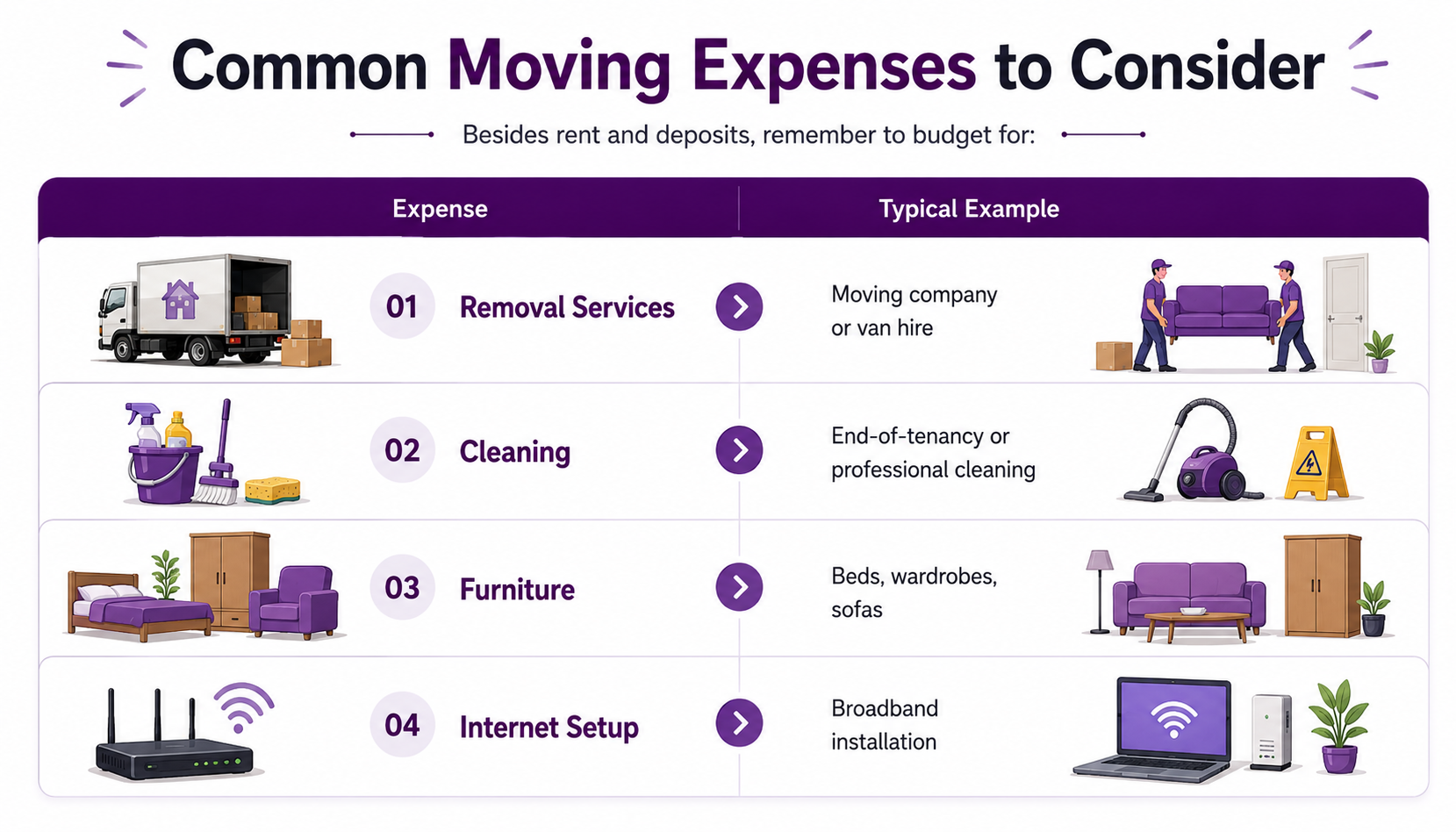
| Expense | Typical Example |
|---|---|
| Removal Services | Moving company or van hire |
| Cleaning | End-of-tenancy or professional cleaning |
| Furniture | Beds, wardrobes, sofas |
| Internet Setup | Broadband installation |
How Our Calculator Works
| What to Do | Details |
|---|---|
| Enter Your Monthly Rent |
• Enter the monthly rent for the property. • The calculator uses this to estimate your rental deposit, weekly rent, and total upfront costs. |
| Choose Your Deposit Rule |
Deposit limits are based on the UK's tenancy deposit protection rules, which explain how deposits should be handled. .• The calculator automatically estimates your tenancy deposit based on your selection. |
| Select a Holding Deposit | Choose whether a holding deposit applies. |
| Choose Advance Rent |
• Select how much rent you'll pay before moving in (such as the first month's rent). • This amount is included in your total moving cost. |
| Add Other Moving Costs |
• Enter any additional expenses such as removals, cleaning, furniture, storage, or utility setup fees. • These costs are added to provide a more complete estimate. |
Example 1 – First-Time Renter
| Item | Value |
|---|---|
| Monthly Rent | £1,200 |
| Deposit Rule | 5 Weeks' Rent |
| Rental Deposit | £1,385 |
| Holding Deposit | £277 |
| Advance Rent | First Month's Rent (£1,200) |
| Other Moving Costs | £300 |
| Total Cash Needed | £3,162 |
Benefits of Using This Calculator
Instant calculations
Easy-to-understand results
Complete cost breakdown
No manual calculations
Helps you budget before moving
Works for different deposit rules
Includes additional moving expenses
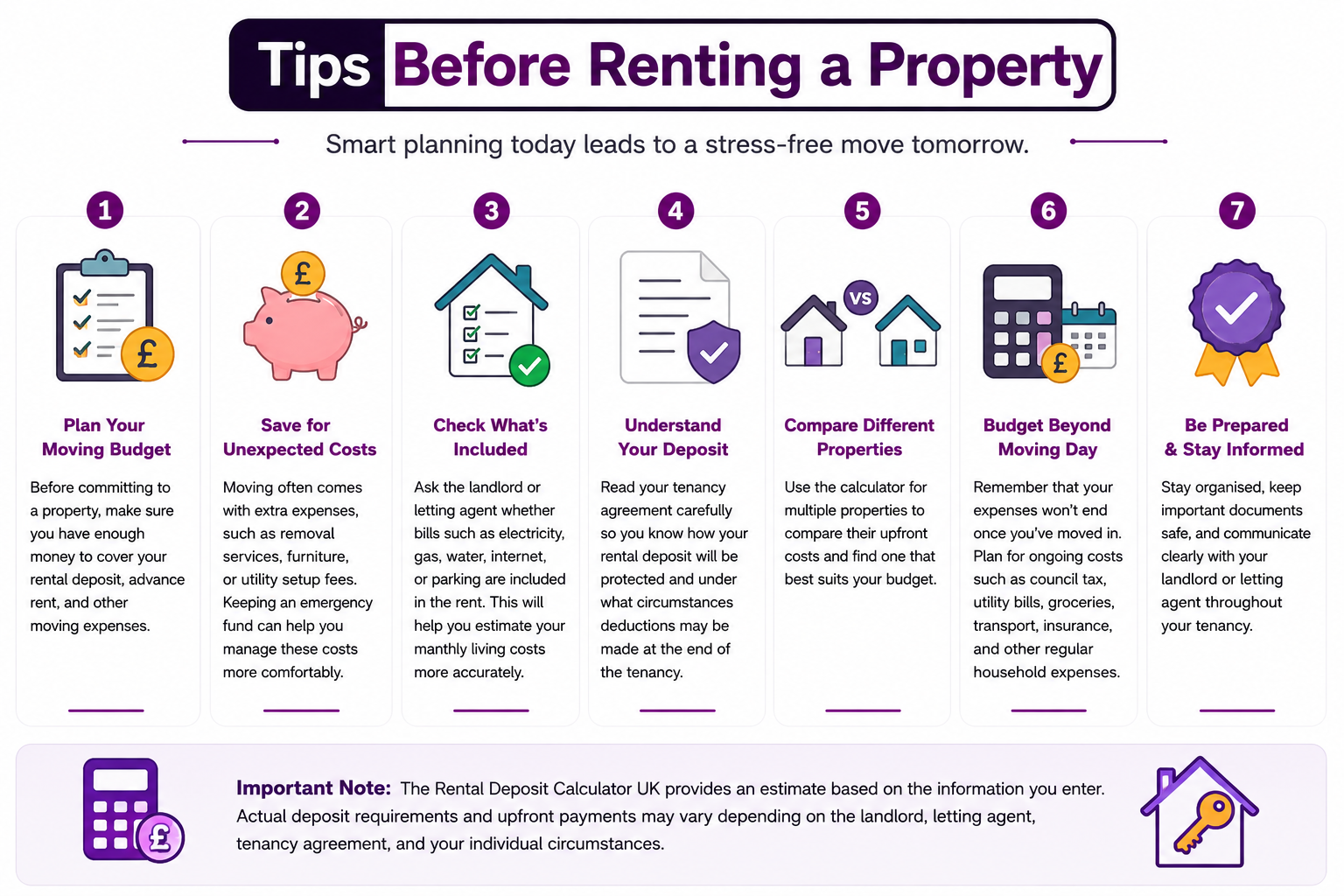
Tips Before Renting a Property
Planning your finances before signing a tenancy agreement can help make your move smoother and reduce unexpected expenses. While this calculator provides an estimate of your upfront costs, it's also important to prepare for the financial responsibilities that come with renting.
-
Plan Your Moving Budget
Before committing to a property, make sure you have enough money to cover your rental deposit, advance rent, and other moving expenses. -
Save for Unexpected Costs
Moving often comes with extra expenses, such as removal services, furniture, or utility setup fees. Keeping an emergency fund can help you manage these costs more comfortably. -
Check What's Included
If utility bills aren't included, consider an energy price comparison before choosing a supplier.
-
Understand Your Deposit
Read your tenancy agreement carefully so you know how your rental deposit will be protected and under what circumstances deductions may be made at the end of the tenancy. -
Compare Different Properties
Use the calculator for multiple properties to compare their upfront costs and find one that best suits your budget. -
Budget Beyond Moving Day
Remember that your expenses won't end once you've moved in. Plan for ongoing costs such as council tax, utility bills, groceries, transport, insurance, and other regular household expenses.
Common Mistakes to Avoid
Many renters underestimate the amount of money needed before moving into a property. Avoiding these common mistakes can help you plan your budget more effectively and reduce financial stress.
| Common Mistake | Why It Matters |
|---|---|
| Budgeting Only for the Deposit | Your upfront costs often include advance rent, a holding deposit, and other moving expenses in addition to the tenancy deposit. |
| Forgetting Moving Expenses | Costs such as removal services, cleaning, furniture, and utility setup can significantly increase your total moving budget. |
| Not Checking the Deposit Rule | Different landlords or tenancy agreements may require different deposit amounts, so it's important to confirm the correct deposit before budgeting. |
| Ignoring Ongoing Monthly Bills | After moving in, you'll still need to pay for council tax, utilities, internet, groceries, transport, and other regular living expenses. |
| Not Keeping an Emergency Fund | Unexpected costs can arise during or after your move. Having extra savings can help you avoid financial pressure. |
Frequently Asked Questions
The calculator estimates your tenancy deposit based on the deposit rule you select (such as 5 or 6 weeks' rent) and your monthly rent.
Yes. If you select advance rent, the calculator includes it in your total upfront moving cost.
Yes. You can include additional costs such as removal services, cleaning, furniture, or any other moving-related expenses.
A holding deposit is often deducted from your final payment if the tenancy goes ahead. Whether it is refundable depends on the tenancy agreement and the circumstances of the application.
Yes. Simply choose a different deposit rule and calculate again to compare your estimated costs.
A tenancy deposit is a refundable amount paid to the landlord before moving into a rental property. It provides protection against unpaid rent or damage beyond normal wear and tear, subject to the tenancy agreement.
A tenancy deposit is paid before the tenancy begins and is usually protected under a deposit protection scheme. A holding deposit is paid to reserve the property while reference checks and the tenancy process are completed.
For many assured shorthold tenancies in England, the maximum tenancy deposit is generally five weeks' rent for properties with an annual rent below the higher-value threshold. Some tenancies may require different arrangements depending on the circumstances.
Weekly rent is used because holding deposits and some tenancy calculations are based on the weekly rental amount rather than the monthly rent.
Yes. If your landlord requires multiple months' rent in advance, simply choose the appropriate advance rent option available in the calculator.
No. The calculator estimates your upfront moving costs only. Regular expenses such as gas, electricity, water, broadband, and council tax are not included unless you add them as other moving costs.
Yes. Students can use the calculator to estimate the amount they may need before moving into student accommodation or private rentals.
Ready to Estimate Your Rental Deposit?
Stop guessing how much money you'll need before moving.
You can also read private renting guidance to better understand the renting process before moving into your new home.
Whether you're renting your first property or planning your next move, our Rental Deposit Calculator UK helps you budget with confidence before signing your tenancy agreement.