Learning about rental homes in the UK can feel challenging when costs keep increasing, particularly in cities such as London, Manchester, Birmingham, Bristol, and Edinburgh. If you earn £35,000 a year, one of the first questions you may ask is: how much rent can I afford each month?
The answer depends on more than your annual salary. Your take-home pay, loans, location, household size, bills, savings goals, and the landlord’s affordability checks can all affect how much you can realistically spend on rent.
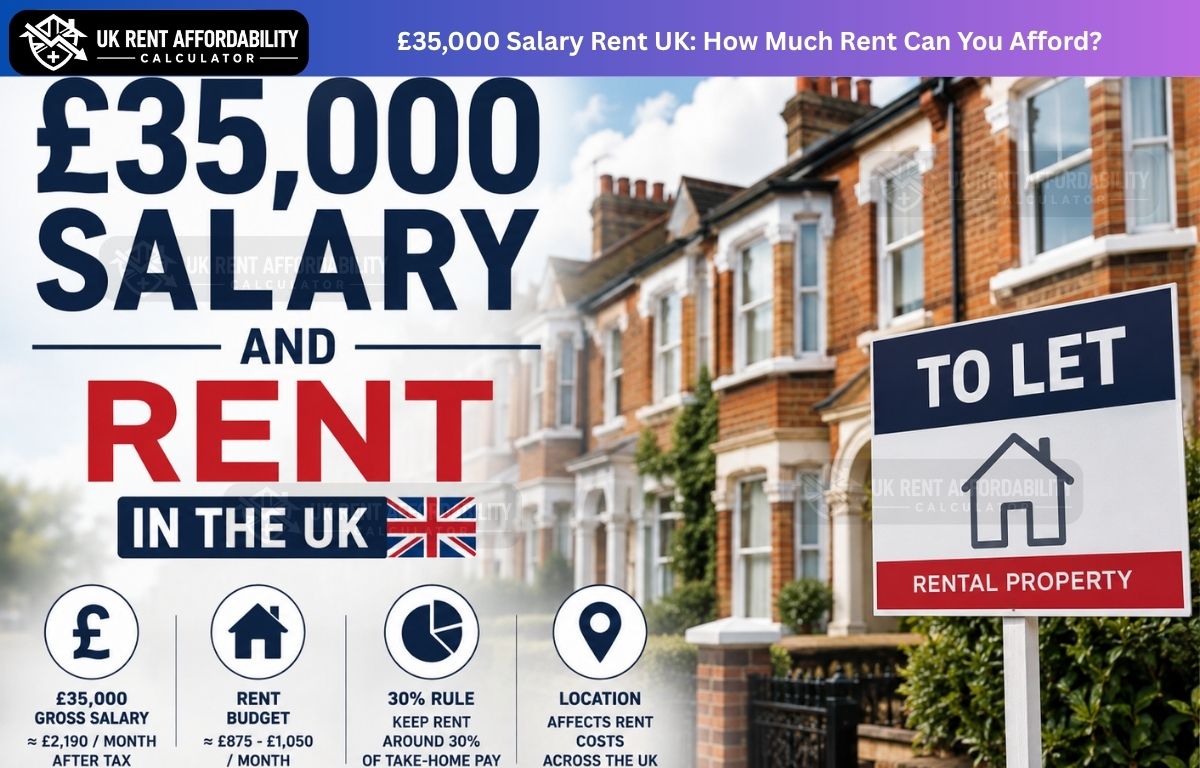
As a general guide, someone earning £35,000 per year in the UK may be able to afford rent of around £850 to £1,150 per month, depending on their financial circumstances. However, the maximum rent a landlord may approve is not always the same as what is comfortable for your lifestyle and budget.
This guide explains how much rent you may be able to afford on a £35,000 salary in the UK, how landlords assess affordability, what your estimated monthly take-home pay may look like, and how to avoid stretching your budget too far.
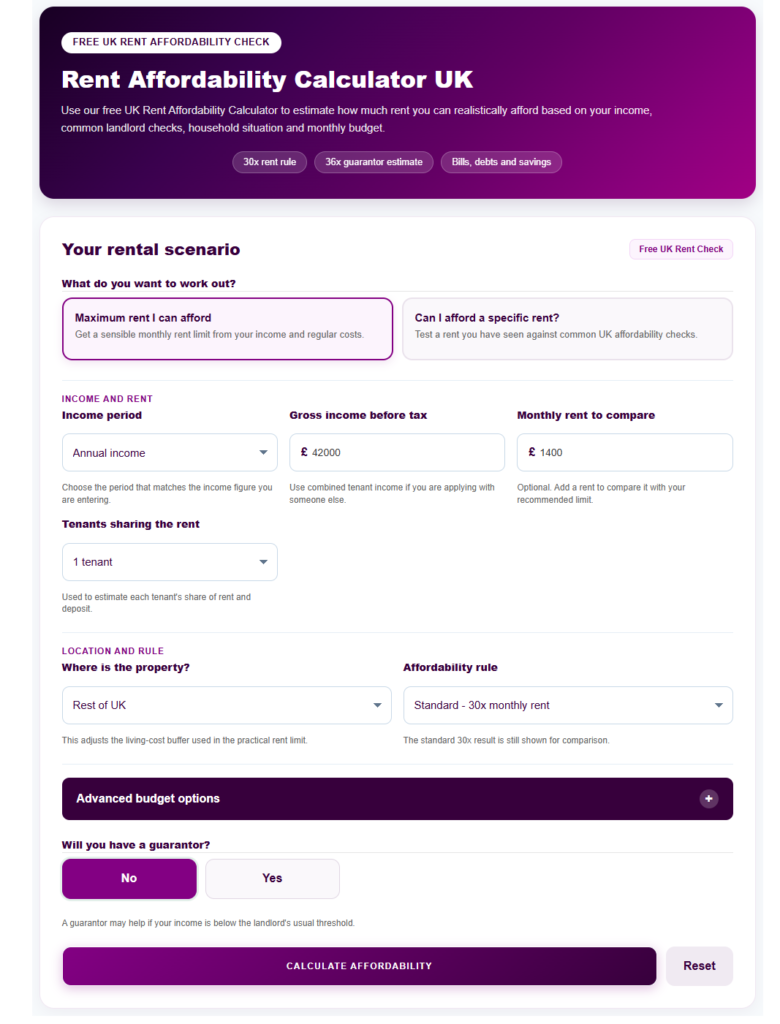
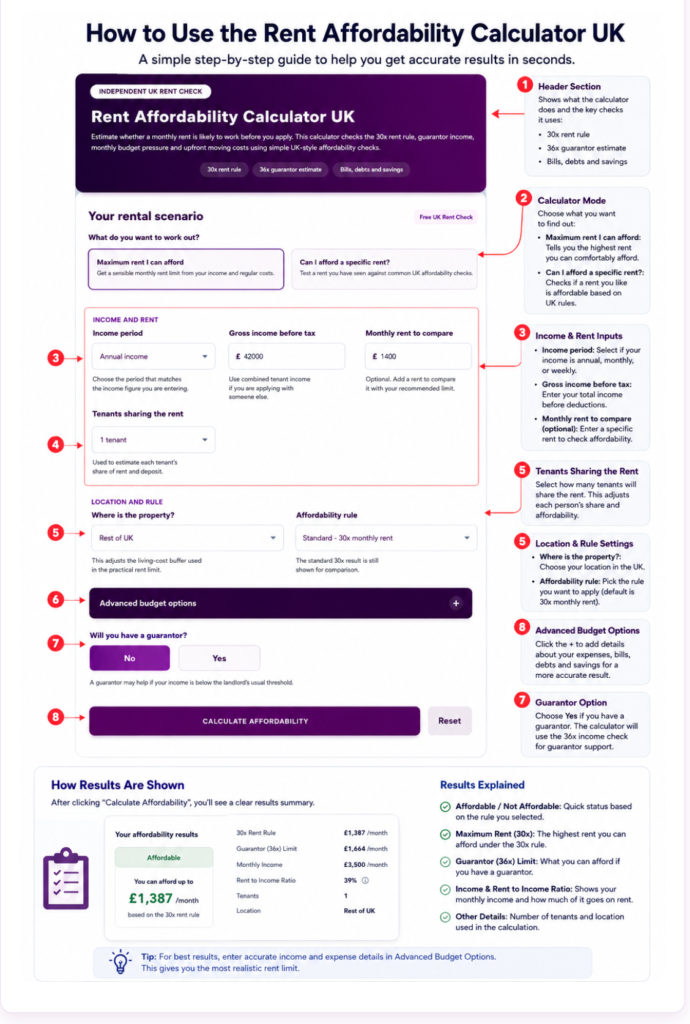
Click Here:Rent Affordability Calculator UK
How to Use the Rent Affordability Calculator UK
How Much Rent Can You Afford on a £35,000 Salary?
A £35,000 annual salary works out to approximately:
- £2,916 per month before tax
- About £2,300 to £2,400 per month after Income Tax and National Insurance
- About £530 to £555 per week before tax
Your exact take-home pay can vary depending on your pension contributions, student loan payments, tax code, and any workplace benefits. However, for many jobs in England, Wales, and Northern Ireland, a £35,000 salary may provide roughly £2,350 per month after tax and other deductions.
A common rent affordability guideline is to spend around 30% to 35% of your take-home income on rent.
Using an estimated monthly take-home income of £2,350:
| Rent Percentage | Estimated Affordable Monthly Rent |
|---|---|
| 25% of take-home pay | £588 |
| 30% of take-home pay | £705 |
| 35% of take-home pay | £823 |
| 40% of take-home pay | £940 |
| 45% of take-home pay | £1,058 |
Based on these figures, a comfortable rent range for someone earning £35,000 may be around £700 to £950 per month.
However, in more expensive parts of the UK, you may need to spend £1,000 or more on rent. While this may be manageable, it could leave you with less money for savings, travel, emergencies, and unexpected bills.
In real life, the amount you can afford is often lower than the amount you technically qualify for. For example, imagine someone earning £35,000 who takes home around £2,350 a month. If they choose a £1,150 property, almost half of their take-home pay could disappear before paying for council tax, energy, food, transport, and other essentials. A £850 property would leave around £300 more each month, which could make a noticeable difference over a full year. That extra money could be used for an emergency fund, debt repayments, savings, or unexpected household expenses. This is why it is useful to compare several rent levels rather than simply choosing the most expensive property a landlord will approve.
Read more:Salary-to-Rent Ratio UK – How Much Should You Spend on RentThe 30% Rent Rule on a £35,000 Salary
| Step | Details |
|---|---|
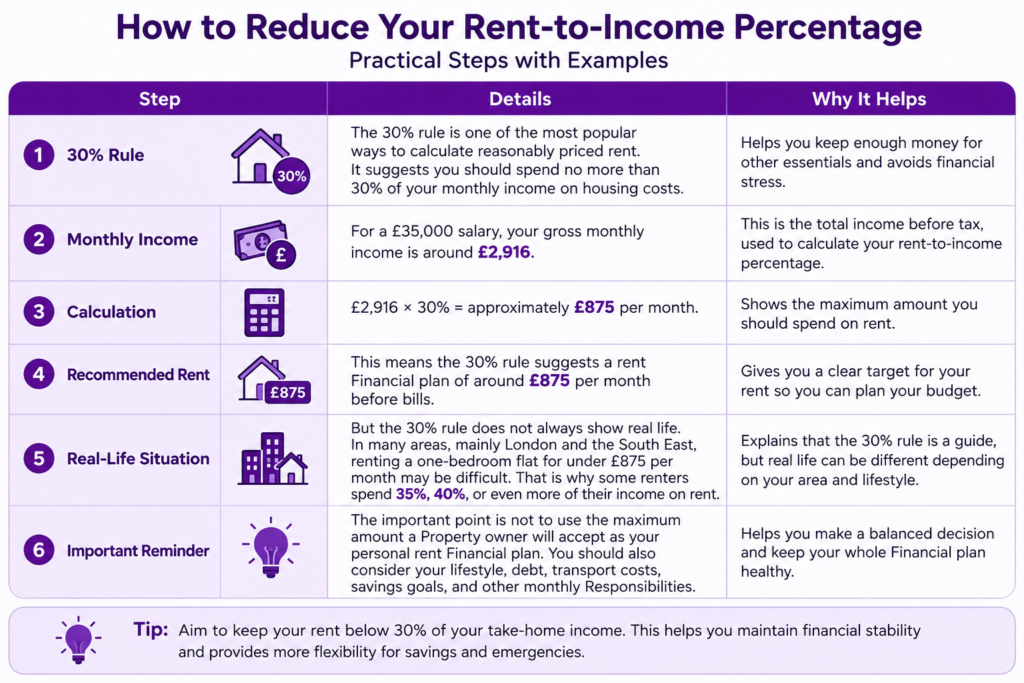
| 30% Rule | The 30% rule is one of the most popular ways to estimate affordable rent. It suggests that you should spend no more than 30% of your monthly income on housing costs. |
| Monthly Income | For a £35,000 salary, your gross monthly income is around £2,916. |
| Calculation | £2,916 × 30% = approximately £875 per month |
| Recommended Rent | Based on the 30% rule, this suggests a rent budget of around £875 per month before bills. |
| Real-Life Situation | However, the 30% rule does not always reflect real-life rental costs. In many areas, particularly London and the South East, finding a one-bedroom flat for under £875 per month can be difficult. That is why some renters spend 35%, 40%, or even more of their income on rent. |
| Important Reminder | The key point is not to use the maximum amount a landlord will accept as your personal rent budget. You should also consider your lifestyle, debt, transport costs, savings goals, and other monthly expenses. |
Read more:Hourly Pay Calculator UK – Best Earnings Guide 2026/27The 30x Rent Rule for a £35,000 Salary
Many UK property owners and letting agents use the 30× rent rule to check whether a renter is likely to meet the income requirement for a property.
The rule means your annual income should be at least 30 times the monthly rent.
| Example | Calculation | Result |
|---|---|---|
| Monthly Rent | £1,000 per month | £1,000 |
| Required Annual Income (30× Rule) | £1,000 × 30 | £30,000 per year |
| Given Salary | — | £35,000 per year |
| Maximum Rent You May Qualify For | £35,000 ÷ 30 | Approximately £1,166 per month |
This means that, based on your salary alone, many property owners may consider you eligible for a rent of up to around £1,166 per month.
However, qualifying for a property and being able to comfortably afford it are two different things.
If you rent a home for £1,166 per month and your take-home pay is around £2,350, nearly half of your monthly income could go towards rent before you pay for utilities, food, transport, council tax, internet, phone bills, insurance, and savings.
For this reason, someone earning £35,000 a year may prefer to keep rent below £950 per month where possible, depending on their other monthly expenses.
Read more:Powerful Fair Rent Calculator UK – Calculate a Fair Monthly RentHow Letting Agents Calculate Rent Affordability
| Affordability Check | How It Works |
|---|---|
| 30× Rent Rule | Your annual income must usually be at least 30 times the monthly rent. |
| 36× Rent Rule | Your annual income must usually be at least 36 times the monthly rent. |
| 2.5× Annual Rent Rule | Your annual income must be at least 2.5 times the annual rent. |
| Surety Requirement | You may need a surety or guarantor if your income is below the required amount. |
| Rule | Calculation | Maximum Monthly Rent on £35,000 Income |
|---|---|---|
| 30× Rule | £35,000 ÷ 30 | £1,166.67 |
| 36× Rule | £35,000 ÷ 36 | £972.22 |
Important tip: Letting agents may use different affordability criteria, so it’s worth asking about their requirements before applying. This can help you avoid unnecessary application fees, wasted time, and disappointment.
Example Monthly Budget on a £35,000 Salary
A £35,000 salary can provide a stable income, but it is important to make sure your rent fits comfortably alongside your other monthly living costs.
Here is an example of a monthly budget based on an estimated take-home pay of £2,350:
| Monthly Expense | Estimated Cost |
|---|---|
| Rent | £850 |
| Council tax | £140 |
| Gas and electricity | £130 |
| Internet and mobile | £55 |
| Groceries | £300 |
| Transport | £180 |
| Insurance and subscriptions | £90 |
| Social spending | £180 |
| Savings or emergency fund | £250 |
| Remaining money | £175 |
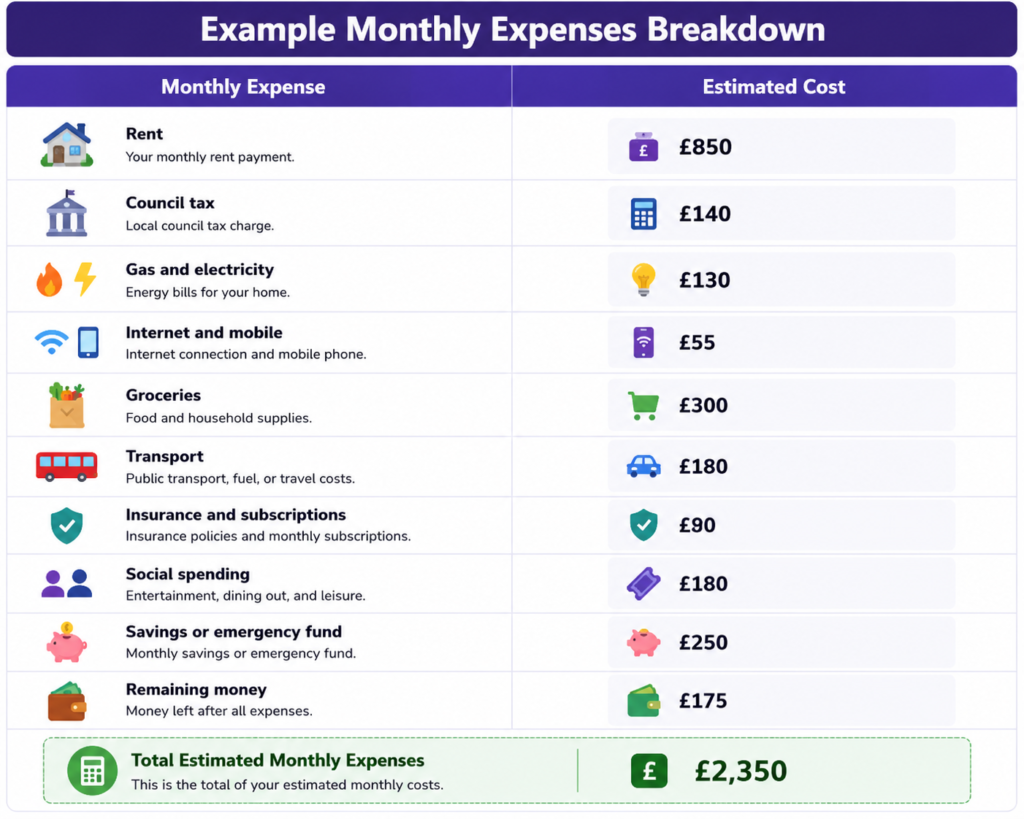
In this example, rent is £850 per month. This leaves room for essential bills, personal spending, and savings.
Now think of rent increasing to £1,150 per month. That is an extra £300 every month, or £3,600 per year. You may still pass a property owner’s affordability check, but your monthly Financial plan could become much More limited.
This is why it is important to calculate your full living costs before choosing a property.
A small difference in monthly rent can have a surprisingly large effect on your yearly budget. Suppose two similar properties are available, with one costing £850 and the other £1,050 per month. The second property costs only £200 more each month, but that becomes £2,400 over a year. If the more expensive property also has higher council tax, energy bills or transport costs, the real difference could be even greater. Before choosing the more expensive home, ask yourself whether the extra space, location or features are worth giving up £2,400 or more of your annual disposable income.
Red more:30x Rent Rule UK – What It Means and How Letting Agents Calculate Affordability
Can You Afford £1,000 Rent on a £35,000 Salary?
| Factor | Details |
|---|---|
| Can You Afford £1,000 Rent? | Yes, it may be possible to manage £1,000 in monthly rent on a £35,000 salary, but this depends on your other living costs and financial commitments. |
| Take-Home Pay Example | If your estimated take-home pay is around £2,350 per month, £1,000 in rent would account for approximately 43% of your monthly income. |
| When It May Be Practical | It may be more manageable if you have no major loan repayments, do not have high car expenses, live close to work and have low commuting costs, share expenses with a partner or housemate, have low childcare costs, and do not need to save a large amount each month. |
| When It May Feel Expensive | However, £1,000 in monthly rent may feel expensive if you also have student loan payments, credit card debt, car finance, dependants, or high commuting costs. |
| Conclusion | For a single person living alone, £1,000 in monthly rent may be possible on a £35,000 salary, but it could require careful financial planning and budgeting. |
Can You Afford £1,200 Rent on a £35,000 Salary?
A rent payment of £1,200 per month is close to the maximum amount many property owners may approve for someone earning £35,000 under the 30x affordability rule.
However, from a personal financial planning point of view, £1,200 in monthly rent may be difficult for many people on this salary.
If your take-home pay is about £2,350 per month, paying £1,200 in rent means that more than 50% of your income goes towards rent alone.
Once you add council tax, household bills, food, transport, and other living costs, you may have very little left for savings or unexpected expenses.
You may be able to manage £1,200 rent if you live with a partner, have additional income, receive regular bonuses, or share household expenses. However, if you are renting alone, it may be safer to look for a lower-cost property or consider a house share.
Rent Affordability by UK Location
| Location | Details |
|---|---|
| Overall UK | The amount of rent you can afford on a £35,000 salary can vary significantly depending on where you live. In lower-cost areas of the UK, a monthly rent budget of £750–£900 may give you access to a good one-bedroom flat or even a small house. In more expensive cities, the same budget may only cover a room in a shared house. |
| London | London has some of the highest rental costs in the UK. On a £35,000 salary, renting alone in central London can be difficult. Many renters choose house shares, live further from the city centre, or share costs with a partner. A room in a shared house or accommodation in outer London with good transport links may be more practical. |
| Manchester | Rental costs have increased in recent years, particularly in central Manchester and popular areas such as Salford Quays, Ancoats, Northern Quarter, and Didsbury. A £35,000 salary may allow you to rent a one-bedroom apartment in some areas, although choosing your location carefully can help keep costs manageable. |
| Birmingham | Birmingham can offer better value than London, although rents have also increased. A monthly rent budget of £750–£950 may provide more options, particularly outside the city centre. |
| Leeds, Sheffield, Liverpool & Newcastle | Cities in the North of England may offer more affordable rental options for people earning £35,000. In many areas, you may find a comfortable one-bedroom flat or small house within a £700–£900 monthly budget. |
| Wales & Scotland | Rental costs vary considerably across Wales and Scotland. Cardiff, Edinburgh, and Glasgow can be more expensive than smaller towns and cities. A £35,000 salary may stretch further when renting outside major city centres. |
When comparing rental properties, do not look at the advertised rent in isolation. A £800 property that requires a long daily commute may cost more overall than a £900 property located closer to your workplace. For example, spending an extra £100 on rent but saving £150 on monthly transport costs could actually make the more expensive property cheaper for your overall budget. Time matters too. A shorter commute can give you more time for family, rest or personal activities. Comparing total monthly living costs can therefore give you a more realistic picture than comparing rent prices alone.
Read more:Salary-to-Rent Ratio UK – How Much Should You Spend on RentShould You Include Bills in Your Rent Budget?
| Housing Cost | Details | Main Point |
|---|---|---|
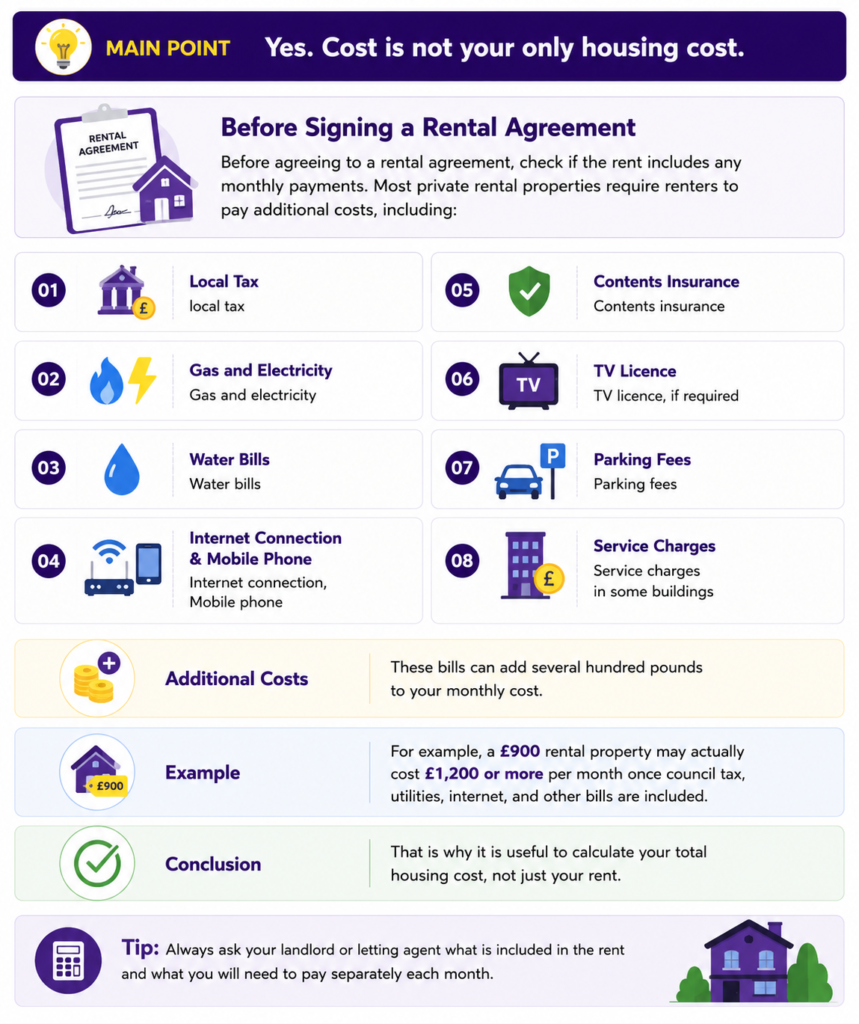
| Before Signing a Rental Agreement | Before agreeing to a rental agreement, check whether the rent includes any additional monthly costs. Most private rental properties require renters to pay some costs separately, including: | Check what is and isn’t included in the rent before signing. |
| Council Tax | Council tax | This may be a separate monthly or annual expense. |
| Gas and Electricity | Gas and electricity | Utility costs can vary depending on usage and the property. |
| Water Bills | Water bills | Check whether water charges are included in the rent. |
| Internet & Mobile Phone | Internet connection and mobile phone | These are usually separate household expenses. |
| Contents Insurance | Contents insurance | Check whether you need cover for your personal belongings. |
| TV Licence | TV licence, if required | A TV licence may be required depending on how you use television services. |
| Parking Fees | Parking fees | Some properties charge separately for parking. |
| Service Charges | Service charges in some buildings | These may apply in certain apartment buildings or developments. |
| Additional Costs | These bills can add several hundred pounds to your monthly housing costs. | Consider your total housing cost, not just the advertised rent. |
| Example | For example, a £900 rental property may actually cost £1,200 or more per month once council tax, utilities, internet, and other bills are included. | Look beyond the advertised rent when planning your budget. |
| Conclusion | That is why it is useful to calculate your total housing costs, not just your rent. | Your overall monthly housing cost gives you a more realistic picture of affordability. |
A useful habit is to create a “true housing cost” before viewing or applying for a property. If the advertised rent is £850, add estimated council tax, gas and electricity, water, internet, insurance and regular transport costs connected with the property. You might discover that the home actually requires £1,150 or more from your monthly budget. Doing this calculation before signing a tenancy agreement can prevent the common mistake of choosing a property because the rent looks affordable while the complete cost of living there is not.
How to Increase Your Rent Budget on a £35,000 Salary
If you are finding it hard to find a suitable rental property within your budget, there are several ways to improve your options.
Sharing with a housemate is one of the easiest ways to reduce rental costs and expenses. A two-bedroom property shared between two people may give you more space and a better location than renting a one-bedroom apartment alone.
Living with a partner can also reduce your overall housing costs because you can share rent, council tax, internet, household expenses, and other costs.
You may also consider moving a little farther from the city centre. Properties near train stations or bus stations can still offer convenient access to work and other areas while costing less than properties in central locations.
Another option is to improve your income. Overtime, freelance work, a pay rise, or a side business may help, but it is best not to rely on irregular income when committing to a long-term rental agreement.
If you have savings, avoid using all of them for rent. Keeping an emergency fund is important because moving costs, advance payments, repairs, travel, and unexpected bills can add up quickly.
Tips Before Renting on a £35,000 Salary
| Budget Tip | Details |
|---|---|
| Calculate Your Budget Using Take-Home Pay | Before applying for a rental property, calculate your financial budget based on your actual take-home pay rather than relying only on your gross salary. |
| Keep Rent Below 35% to 40% of Your Income | Try to keep rent below 35% to 40% of your monthly take-home income if possible. This gives you more flexibility if bills increase or your financial circumstances change. |
| Check Council Tax Costs | Check how much council tax you will need to pay. Some properties may seem affordable at first, but a higher council tax band can make a significant difference to your monthly costs. |
| Check the Property’s Energy Efficiency | Check whether the property is energy-efficient. A lower rent for a poorly insulated property may cost more in winter because of higher heating bills. |
| Consider Transport Costs | Think about your transport costs. A cheaper home farther from work may not save you much money if you spend more on trains, petrol, parking, or buses. |
| Avoid Stretching Your Budget for an Expensive Postcode | Finally, avoid increasing your budget simply to rent in a more expensive postcode. A slightly cheaper home can give you greater financial security and reduce monthly financial pressure. |
Readmore:Rent to Income Ratio Calculator UK – 7 Easy Ways to Save MoneyHow much rent can I afford on a £35,000 salary in the UK?
On a £35,000 salary, you may qualify for rent of around £1,100 to £1,166 per month under a typical landlord affordability check. However, a more comfortable rent budget is often around £700 to £950 per month, depending on your bills and other financial commitments.
What is £35,000 after tax per month in the UK?
A £35,000 annual salary may provide around £2,300 to £2,400 per month after Income Tax and National Insurance. Your exact take-home pay can change depending on pension contributions, student loans, tax code, and workplace benefits
I rent a £1,000 flat on a £35,000 salary?
Yes, you may be able to rent a £1,000 flat on a £35,000 salary. However, £1,000 rent could take around 40% to 45% of your take-home income, so you should check your budget carefully before committing.
Can I rent a £1,200 property on a £35,000 salary?
You may pass some landlord affordability checks for £1,200 rent, especially if they use the 30x rent rule. However, paying £1,200 per month may leave very little money after bills if you live alone.
What salary do I need for £1,000 rent in the UK?
Using the 30x rent rule, you may need an annual salary of around £30,000 to rent a property costing £1,000 per month. Some letting agents use stricter rules, which may require a higher salary.
What salary do I need for £1,200 rent?
Using the 30x rent rule, you may need an annual income of around £36,000 to rent a property costing £1,200 per month. If the letting agent uses a 36x rule, you may need around £43,200 per year.
Do landlords use gross salary or take-home pay?
Most landlords and letting agents use your gross annual salary before tax when checking affordability. However, you should use your take-home pay when deciding whether the rent is realistic for your personal budget.
Is £35,000 a good salary in the UK for renting?
A £35,000 salary can be enough to rent comfortably in many parts of the UK, especially outside London and other high-cost areas. In expensive cities, you may need to share accommodation, live further from the centre, or spend a higher percentage of your income on rent.
Should rent include bills when calculating affordability?
Yes. You should include council tax, utilities, water, internet, transport, insurance, and other monthly costs when calculating what you can afford. A property may look affordable based on rent alone but become expensive once bills are added.
Is it better to rent alone or share on a £35,000 salary?
Sharing can make a £35,000 salary go much further because you can split rent, council tax, utilities, and internet costs. Renting alone gives you more privacy, but it may require a higher housing budget and leave less money for savings.
Before signing a tenancy agreement, give yourself a realistic monthly “test run”. For one month, set aside the amount you expect to pay in rent plus your estimated housing bills. Then track whether you can still cover food, transport, savings and normal personal spending without relying on credit. If the budget feels comfortable, the property is more likely to be sustainable. If you regularly have to cut essentials or use borrowing to get through the month, the rent is probably too high for your current income. This simple exercise can reveal problems that a landlord affordability check will not show.
Canclusion
If you earn £35,000 per year in the UK, you may qualify for rent of up to around £1,100 to £1,166 per month under many landlord affordability checks.
However, a more comfortable rent limit for many people may be between £700 and £950 per month, depending on bills, loans, savings, travel costs, and lifestyle.
You may be able to manage £1,000 per month if you manage your money carefully, but rent above £1,100 can become difficult if you are living alone and paying all household costs yourself.
The best rent amount is not always the highest amount a landlord or letting agent approves. It is the amount that allows you to pay your bills, save money, enjoy your life, and handle unexpected costs without financial pressure.