Monthly Rent Budget
The Monthly Rent Budget Calculator helps you estimate how much rent you can comfortably afford based on your monthly income and financial commitments. Planning your rent budget is one of the most important steps before renting a property, as it helps you avoid financial stress and maintain a healthy balance between housing costs and other essential expenses. This calculator provides a quick estimate of a realistic monthly rent budget, making it easier to choose a home that fits your finances.
What is a Monthly Rent Budget?
A Monthly Rent Budget is the amount of money you can realistically spend on rent each month without putting unnecessary pressure on your finances. It takes into account your monthly income, essential living expenses, debts, and savings goals to help you find a rental property that fits comfortably within your budget.
Our Monthly Rent Budget Calculator UK makes this process quick and easy by estimating a suitable monthly rent based on your income and financial situation. Instead of guessing how much rent you can afford, you can instantly calculate a recommended rent budget and make more informed housing decisions.
Whether you're renting your first home, relocating for work, moving to a larger property, or simply reviewing your finances, this calculator provides a fast and reliable estimate of a comfortable monthly rent budget. Simply enter your income and any required financial details, and the calculator will show an estimated rent budget that aligns with common affordability guidelines.
Planning your rent budget before searching for a property can help you avoid financial stress, manage your monthly expenses more effectively, and improve your chances of finding a home that suits both your lifestyle and your budget.
For additional help with managing your monthly finances, you can also read the budgeting advice from Citizens Advice. .
Plan Your Monthly Rent Budget with Confidence
Knowing your monthly rent budget before you start searching for a property helps you avoid financial stress and choose a home that fits your income. Our Monthly Rent Budget Calculator gives you a clear estimate of what you can comfortably spend on rent each month.
It helps you understand:
Estimate how much monthly rent fits comfortably within your income.
See how your monthly earnings affect your recommended rent budget.
Find out how much money could be left after paying your rent.
Balance your rent with bills, groceries, transport, savings, and other essential expenses.
Set a realistic budget before viewing properties and avoid wasting time on homes outside your price range.
Find Your Recommended Monthly Rent Budget
Not sure how much rent you should budget for each month?
Simply enter your income into our Monthly Rent Budget Calculator, and it will estimate a recommended monthly rent based on common affordability guidelines and your financial situation.
Practical Example
Annual Income: £36,000
The calculator estimates that a monthly rent budget of around £900–£1,000 is a comfortable range, depending on your financial commitments and affordability preferences.
Instead of guessing your budget or viewing properties beyond your means, you can focus on homes that fit comfortably within your finances and are more likely to be affordable in the long term.
Check If Your Rent Fits Your Budget
Already found a flat or house you like?
Enter the monthly rent along with your income, and our Monthly Rent Budget Calculator will show whether the property fits within your recommended rent budget.
Practical Example
Emma earns £42,000 per year and wants to rent a flat costing £950 per month.
The calculator shows that the rent is within her recommended monthly rent budget, meaning the property appears affordable based on her income. Emma should still consider other monthly expenses, such as utility bills, transport, groceries, and savings, before signing the tenancy agreement.
By checking your rent against your budget in advance, you can make more confident decisions and avoid stretching your finances too far.
How This Monthly Rent Budget Calculator Helps
Estimate a Comfortable Rent Budget
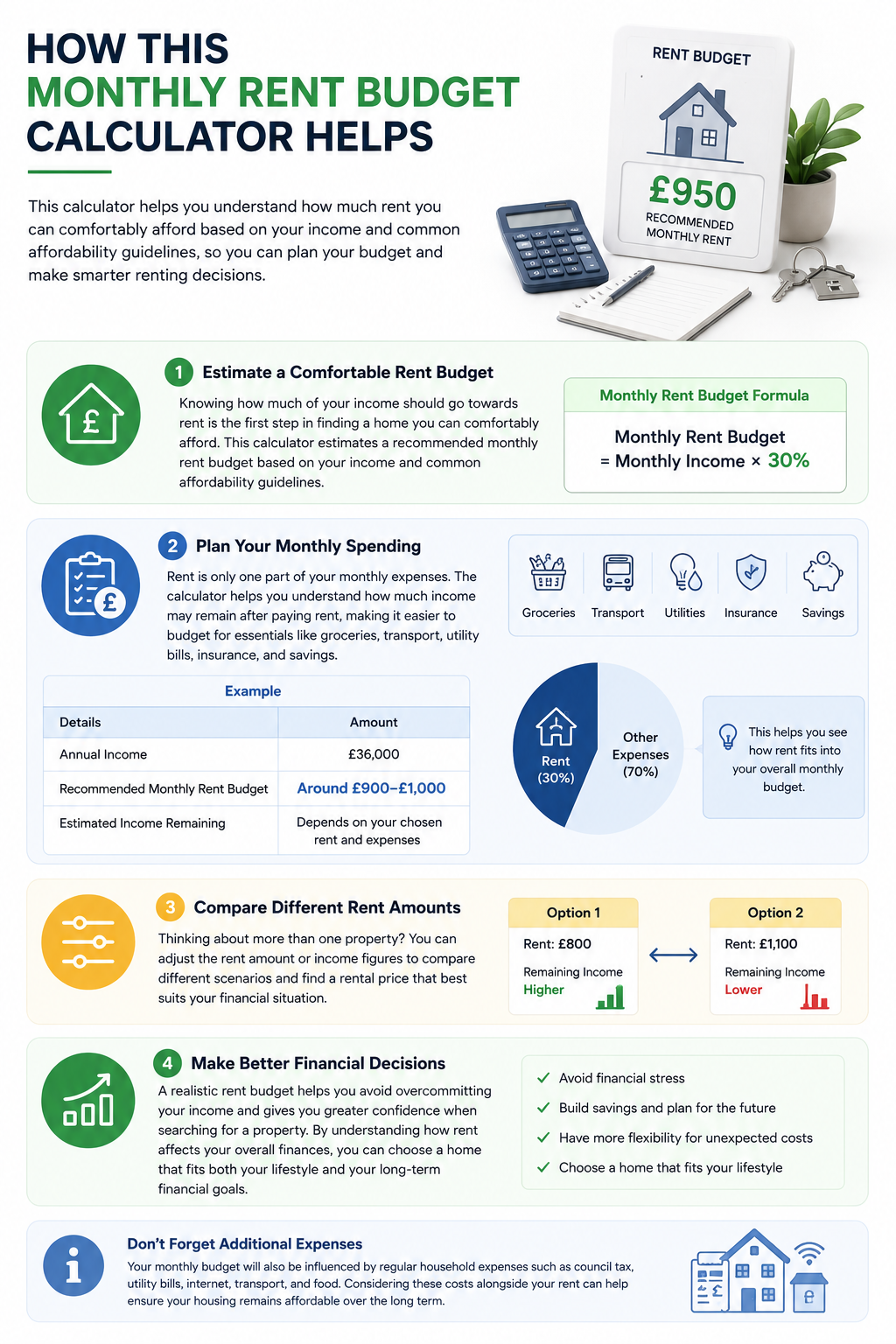
Knowing how much of your income should go towards rent is the first step in finding a home you can comfortably afford. This calculator estimates a recommended monthly rent budget based on your income and common affordability guidelines.
Plan Your Monthly Spending
Rent is only one part of your monthly expenses. The calculator helps you understand how much income may remain after paying rent, making it easier to budget for essentials like groceries, transport, utility bills, insurance, and savings.
Example
| Details | Amount |
|---|---|
| Annual Income | £36,000 |
| Recommended Monthly Rent Budget | Around £900–£1,000 |
| Estimated Income Remaining | Depends on your chosen rent and expenses |
Compare Different Rent Amounts
Thinking about more than one property? You can adjust the rent amount or income figures to compare different scenarios and find a rental price that best suits your financial situation.
Make Better Financial Decisions
A realistic rent budget helps you avoid overcommitting your income and gives you greater confidence when searching for a property. By understanding how rent affects your overall finances, you can choose a home that fits both your lifestyle and your long-term financial goals.
Your monthly budget will also be influenced by regular household expenses such as council tax, utility bills, internet, transport, and food. Considering these costs alongside your rent can help ensure your housing remains affordable over the long term..
Why Your Monthly Rent Budget Matters
Choosing a property based only on the advertised rent can make it difficult to manage your finances in the long run.
Your monthly rent budget should leave enough money for your everyday living costs, emergency savings, and other financial commitments. Setting a realistic budget before renting helps you avoid unnecessary financial stress and maintain a healthy balance between housing costs and essential expenses.
In addition to rent, you may also need to budget for:
- Council Tax
- Electricity
- Gas
- Water
- Internet
- Mobile phone
- Groceries
- Transport
- Insurance
- Savings
Using a Monthly Rent Budget Calculator helps you estimate a rent amount that fits comfortably within your income, so you can enjoy your home without stretching your finances too far.
You can learn more about how Council Tax works by reading the official Council Tax guidance. .
Monthly Rent Budget Examples
The table below provides estimated monthly rent budgets based on annual income using the commonly recommended guideline of spending around 30% of your gross monthly income on rent. Use it as a general reference, while remembering that your ideal budget may vary depending on your lifestyle, bills, debts, and savings goals.
| Annual Income | Monthly Income | Recommended Monthly Rent Budget | Suitable For |
|---|---|---|---|
| £24,000 | £2,000 | Around £600 | Shared accommodation or a studio |
| £36,000 | £3,000 | Around £900 | One-bedroom flat or small apartment |
| £48,000 | £4,000 | Around £1,200 | Two-bedroom property or family rental |
| £60,000 | £5,000 | Around £1,500 | Larger home or property in higher-cost areas |
These examples are intended as a starting point for budgeting. Your ideal monthly rent may be lower or higher depending on your regular expenses, financial commitments, location, and savings objectives. Use the Monthly Rent Budget Calculator to receive a more personalised estimate based on your own financial situation.
How Our Monthly Rent Budget Calculator Works
| Step | What to Do |
|---|---|
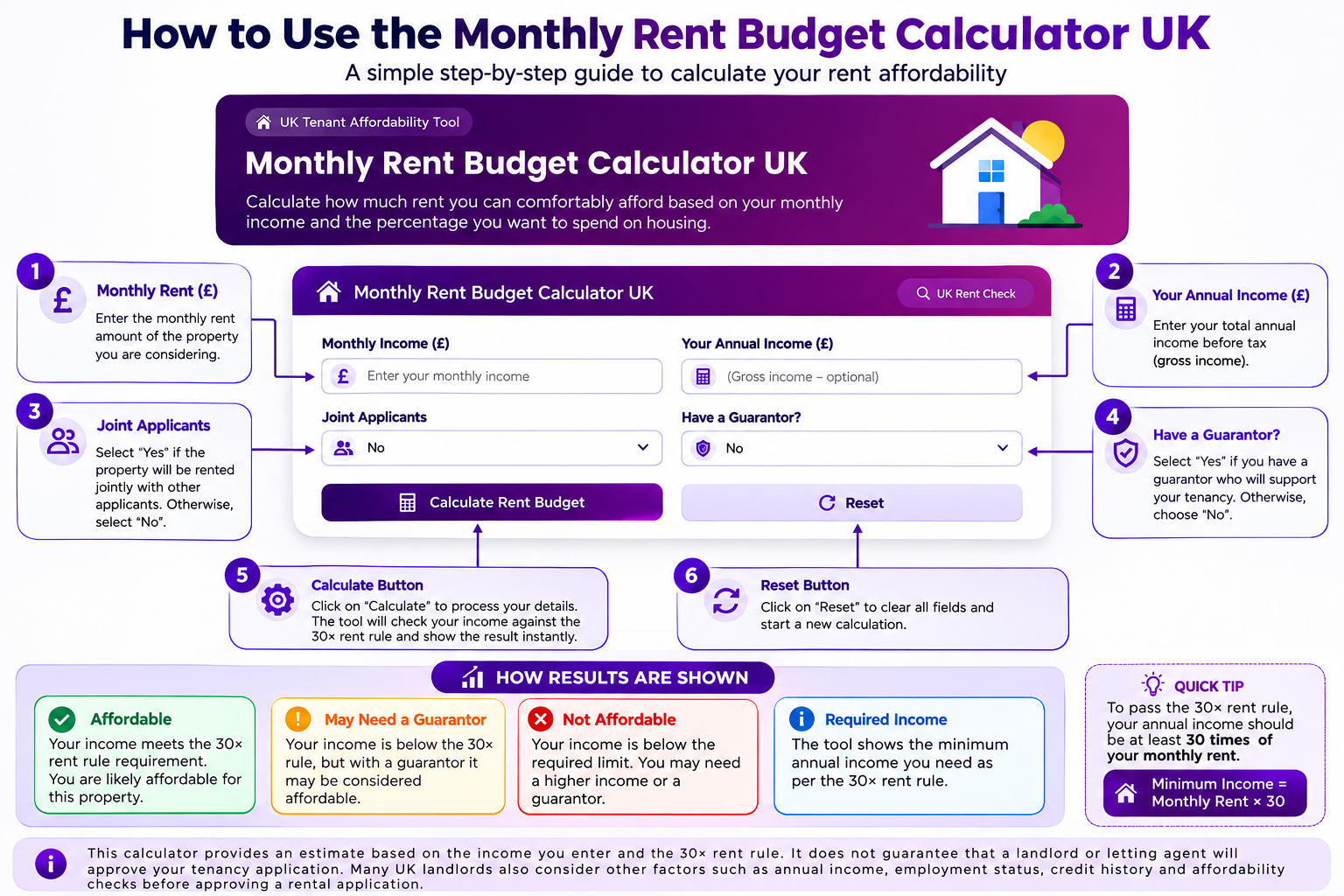
| Enter Your Annual Income | Type your gross annual income before tax. If you're budgeting with a partner, enter your combined annual income if supported by the calculator. |
| Enter Your Monthly Expenses (Optional) | Include regular expenses such as loan repayments, bills, or other financial commitments for a more accurate estimate. |
| Review Your Income Details | Check that your income information is correct before calculating your recommended rent budget. |
| Click Calculate | Press the Calculate button to estimate how much monthly rent you can comfortably afford. |
| View Your Results | The calculator displays your Recommended Monthly Rent Budget, Estimated Monthly Income, and an estimate of your Remaining Income After Rent, helping you plan your finances with confidence. |
Practical Example – Monthly Rent Budget
The example below shows how the Monthly Rent Budget Calculator estimates a comfortable monthly rent based on income using the commonly recommended guideline of spending around 30% of your gross monthly income on rent.
| Item | Value |
|---|---|
| Annual Income | £42,000 |
| Monthly Income | £3,500 |
| Recommended Rent Budget (30%) | £1,050 per month |
| Budget Assessment | Within a Comfortable Range |
| Estimated Income Remaining | £2,450 per month (before other expenses) |
Explanation
With an annual income of £42,000, the monthly gross income is £3,500. Following the commonly recommended guideline of allocating around 30% of monthly income to rent, the suggested monthly rent budget is approximately £1,050.
This estimate helps you choose a rental property that is more likely to fit comfortably within your overall budget. Keep in mind that your ideal rent budget may vary depending on factors such as council tax, utility bills, transport costs, debt repayments, and personal savings goals.
Understanding Your Recommended Rent Budget
Your recommended monthly rent budget is an estimate of how much you can comfortably spend on rent while still having enough income for other essential living costs.
The calculation is based on your income and commonly accepted budgeting guidelines. However, your ideal rent budget may vary depending on your personal financial circumstances.
Example
| Item | Amount |
|---|---|
| Annual Income | £29,000 |
| Monthly Income | £2,417 |
| Recommended Rent Budget (30%) | Around £725 per month |
| Remaining Income | Around £1,692 per month (before other expenses) |
In this example, an annual income of £29,000 suggests a recommended monthly rent budget of approximately £725. Choosing a property within this range can help leave enough income for everyday expenses and reduce the risk of financial strain.
Remember that your budget should also account for costs such as Council Tax, utility bills, groceries, transport, insurance, and savings. While the calculator provides a helpful estimate, you should adjust your rent budget to reflect your own financial goals and lifestyle.
Following financial wellbeing guidance can help you build a more sustainable long-term housing budget.
Budgeting with Joint Applicants
Many people rent a property with a partner, friend, or family member. Sharing a home often means combining incomes, making it possible to afford a higher monthly rent while splitting housing costs between applicants.
Our Monthly Rent Budget Calculator can help estimate a suitable rent budget based on your combined annual income, giving you a more realistic picture of what you can comfortably afford together.
Practical Example
| Item | Amount |
|---|---|
| Applicant 1 Annual Income | £25,000 |
| Applicant 2 Annual Income | £23,000 |
| Combined Annual Income | £48,000 |
| Combined Monthly Income | £4,000 |
| Recommended Monthly Rent Budget (30%) | Around £1,200 per month |
| Budget Assessment | Comfortably Affordable Together |
Explanation
With a combined annual income of £48,000, the applicants have a gross monthly income of £4,000. Following the commonly recommended guideline of spending around 30% of monthly income on rent, a monthly rent budget of approximately £1,200 is considered a comfortable target.
By combining incomes, joint applicants can often access a wider range of rental properties while sharing housing costs. However, both applicants should also consider other monthly expenses—such as council tax, utility bills, transport, groceries, and savings—to ensure the chosen rent remains affordable for everyone involved.
Who Can Use This Monthly Rent Budget Calculator?
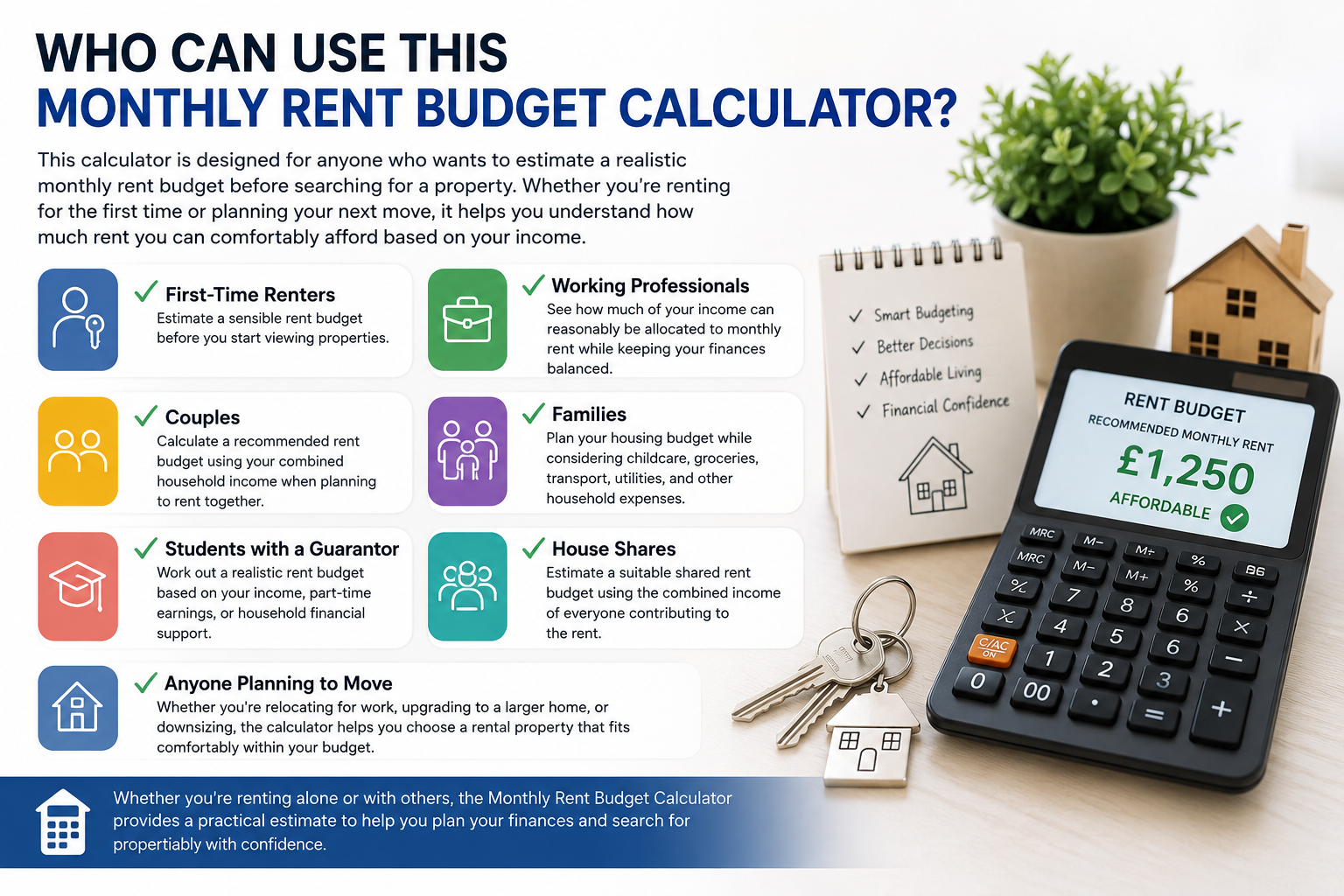
This calculator is designed for anyone who wants to estimate a realistic monthly rent budget before searching for a property. Whether you're renting for the first time or planning your next move, it helps you understand how much rent you can comfortably afford based on your income.
Estimate a sensible rent budget before you start viewing properties.
See how much of your income can reasonably be allocated to monthly rent while keeping your finances balanced.
Calculate a recommended rent budget using your combined household income when planning to rent together.
Plan your housing budget while considering childcare, groceries, transport, utilities, and other household expenses.
Work out a realistic rent budget based on your income, part-time earnings, or household financial support.
Estimate a suitable shared rent budget using the combined income of everyone contributing to the rent.
Whether you're relocating for work, upgrading to a larger home, or downsizing, the calculator helps you choose a rental property that fits comfortably within your budget.
Tips for Planning Your Monthly Rent Budget
Taking a few extra minutes to plan your rent budget before searching for a property can help you avoid financial stress and make smarter renting decisions.
Before signing a tenancy agreement, it's also worth understanding your rights and responsibilities as a tenant. The UK Government provides official guidance covering tenancy agreements, deposits, and renting responsibilities..
-
Know Your Budget
Choose a rental property that fits comfortably within your income rather than stretching your finances to the limit. -
Keep an Emergency Fund
Unexpected expenses can happen at any time. Having savings can help cover moving costs, emergency repairs, or temporary changes in income. -
Include All Living Costs
Remember that rent is only part of your monthly budget. You should also plan for:
Council Tax
Electricity and gas
Water
Internet and mobile phone
Groceries
Transport
Insurance
Entertainment
Savings and other financial commitments -
Compare Different Rent Budgets
Try different income and rent scenarios using the calculator to find a monthly budget that best suits your financial situation. -
Use Accurate Income Information
Enter your correct gross annual or monthly income to receive the most reliable rent budget estimate. -
Leave Room for Savings
Just because you can afford a higher rent doesn't always mean you should. Choosing a property below your maximum budget can give you greater financial flexibility and help you build savings for future goals or unexpected expenses.
Common Budgeting Mistakes to Avoid
Many renters make simple budgeting mistakes that can put unnecessary pressure on their finances. The table below highlights some of the most common mistakes and explains why they matter when planning your monthly rent budget.
| Common Mistake | Why It Matters |
|---|---|
| Ignoring Monthly Bills | Rent is only one expense. Forgetting utilities, council tax, groceries, transport, and other regular costs can make your budget unrealistic. |
| Setting an Unrealistic Rent Budget | Choosing a property that's too expensive may leave little money for savings or everyday living expenses. |
| Forgetting Existing Debts | Loan repayments, credit cards, and finance agreements reduce the amount you can comfortably spend on rent each month. |
| Not Keeping an Emergency Fund | Unexpected costs such as moving expenses, repairs, or temporary income changes can create financial stress if you have no savings. |
| Ignoring Future Financial Changes | Your circumstances may change over time. Choosing a rent budget with some flexibility can help you manage future increases in expenses. |
Frequently Asked Questions
A Monthly Rent Budget Calculator is a free tool that estimates how much rent you can comfortably afford each month based on your income and, where applicable, your financial commitments. It helps you plan your housing budget before searching for a rental property.
A common budgeting guideline is to spend around 30% of your gross monthly income on rent. However, the right amount depends on your lifestyle, location, debts, household expenses, and savings goals.
Yes. If you're renting with a partner, friend, or family member, you can use your combined income to estimate a shared monthly rent budget.
No. The calculator provides an estimate of a comfortable rent budget. Landlords and letting agents may use different affordability checks and consider factors such as your credit history, employment, references, and financial circumstances.
Yes. Rent is only one part of your monthly expenses. You should also budget for Council Tax, utility bills, groceries, transport, internet, insurance, and other regular costs.
You may be able to, but spending more on rent could reduce the money available for savings and other essential expenses. Choosing a property within your recommended budget is generally a more sustainable approach.
You should enter your gross income (before tax) unless the calculator specifically asks for your net (take-home) income. Using the correct income figure will provide a more accurate estimate.
The calculator is designed to encourage responsible budgeting. It aims to leave enough income for everyday living costs, unexpected expenses, and long-term financial goals rather than allocating all of your income to rent.
Yes. Our Monthly Rent Budget Calculator is completely free and can be used as many times as you like to compare different income levels and rent scenarios before choosing a property.
Yes. The calculator is designed for UK renters and provides estimates based on commonly accepted budgeting guidelines. It can help you set a realistic rent budget before applying for a tenancy.
Ready to Calculate Your Monthly Rent Budget?
Stop guessing and start planning your finances with confidence using our Monthly Rent Budget Calculator.
Simply enter your income and any relevant financial details to receive an instant estimate of how much rent you can comfortably afford each month. In just a few clicks, you'll see your recommended monthly rent budget and gain a clearer understanding of how your housing costs fit within your overall finances.
Whether you're renting on your own, budgeting with a partner, planning a house share, or preparing for your next move, our Monthly Rent Budget Calculator helps you make informed decisions before you start searching for a property.
Before choosing your next rental property, you may also find the renting guidance from GOV.UK useful.