
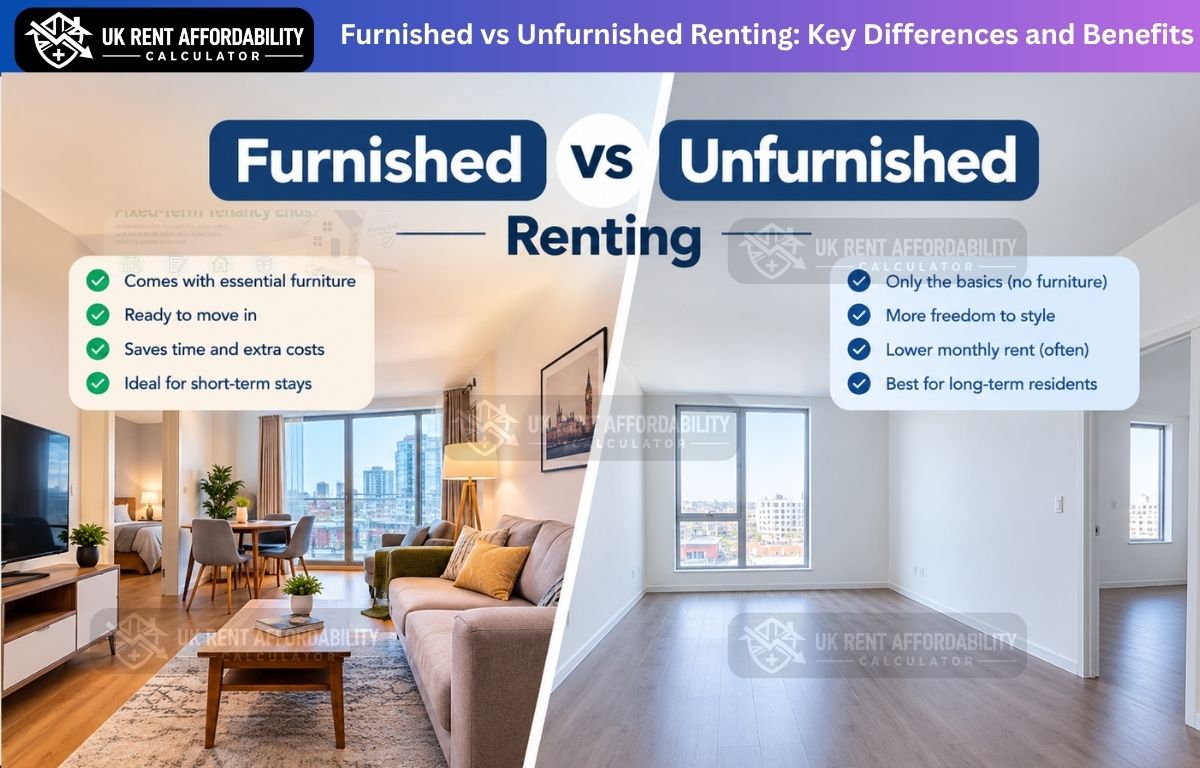
Furnished vs unfurnished renting was the choice facing Perrin, who had found two flats he liked in the same block. One was furnished, with a sofa, a bed and a dining table already in place, and it cost £150 a month more than the identical unfurnished flat downstairs. He could move into the furnished flat with two suitcases. The unfurnished flat would need furniture, delivery drivers, assembly instructions and a weekend of flat-pack misery.
Yet over two years, that £150 a month would add up to £3,600 — enough to buy decent furniture several times over. Perrin was not choosing between two flats. He was choosing between paying monthly for convenience and paying once for ownership, and the right answer depended entirely on how long he planned to stay.
That is the real furnished vs unfurnished renting decision. It looks like a question about sofas. It is mostly a question about time, money, deposits and who is responsible when something breaks.
Quick Answer: Furnished usually means beds, seating, storage and white goods are included, and it usually costs more in rent — often around 10–20% more for comparable flats. Unfurnished usually still includes fitted kitchen units, floor coverings and often an oven and white goods, but you supply the furniture. Neither label has a legal definition in the UK, so the inventory — not the advert — decides what you are actually getting. If you will stay under about a year, furnished often wins. If you will stay two years or more, or you already own furniture, unfurnished usually wins.
What Do “Furnished”, “Part-Furnished” and “Unfurnished” Actually Mean?
In UK lettings, these three words are descriptions, not legal categories. No statute defines them, and two agents can use the same word for very different flats. One agent’s “furnished” might include crockery and a television. Another’s might mean a bed, a sofa and not much else. That is why you should never sign based on the label alone.
| Label | What it usually means |
|---|---|
| Furnished | Beds, sofa, dining table and chairs, wardrobes or storage, plus white goods |
| Part-furnished | Some of the above — often white goods and one or two large items, with the rest left to you |
| Unfurnished | Fitted kitchen and floor coverings, usually an oven and hob, sometimes white goods — but no loose furniture |
The only document that settles the question is the inventory and check-in report. If an item is not listed there, you cannot safely assume it is included, and you will struggle to prove it was missing or damaged later. Ask for the itemised inventory before you sign, and check it against what you saw at the viewing. Photographs in an advert are not a promise. The inventory is the record that a deposit adjudicator will actually read.
Furnished vs Unfurnished Renting: What Does a Furnished Property Usually Include?
A typical furnished let is ready to live in on day one. You should expect a bed and mattress in each bedroom, a sofa or seating for the household, a dining table and chairs, wardrobes or other storage, and curtains or blinds. White goods — a fridge-freezer, washing machine, oven and hob — are usually included too, though in some flats the oven and hob count as part of the fitted kitchen rather than the furniture.
| Usually included in a furnished let | Often NOT included |
|---|---|
| Beds, mattresses, wardrobes and bedside tables | Bedding, towels and pillows |
| Sofa, armchairs and coffee table | Crockery, cutlery and kitchen utensils |
| Dining table and chairs | Television (unless the advert says so) |
| White goods and small extras the agent lists | Your desk, office chair and personal storage |
Do not assume the extras. If you need a desk, a television or a second wardrobe, ask whether each item is included and get the answer in writing. Judge the actual furniture, not the label.
What Does an Unfurnished Property Still Include?
“Unfurnished” does not mean empty. You will almost always find fitted kitchen units, worktops, a sink, floor coverings or safe floorboards, light fittings, curtains or blinds, and an oven and hob. Many unfurnished lets also include a fridge, freezer and washing machine, because landlords know a flat without them is hard to let. Some include fitted wardrobes.
| What unfurnished almost always includes | What you must usually supply yourself |
|---|---|
| Fitted kitchen, oven, hob and sink | All beds and mattresses |
| Floor coverings and light fittings | Sofas, tables, chairs and storage |
| Curtains or blinds and fitted wardrobes where fitted | Desks, shelving and soft furnishings |
| Bathroom suite and heating system | Fridge and washing machine, if not listed |
This matters when you compare prices. If the unfurnished flat already includes white goods, your start-up list is shorter. If it does not, add a fridge-freezer and washing machine to your budget — or ask the landlord whether they will provide them.
Furnished vs Unfurnished Renting: How Much More Does Furnished Rent Cost?
Furnished rent is usually higher, but there is no fixed national premium. Industry comparisons repeatedly put the gap at roughly 10–20% for comparable flats, with the premium largest in studios and one-bedroom flats aimed at students, relocators and short-stay professionals, and smallest — sometimes zero — in larger family houses, where tenants usually prefer to bring their own furniture. Location matters more than any average: in one city the gap may be 9%, in another over 20%.
| Comparison | Figure |
|---|---|
| Furnished two-bedroom flat (example) | £1,150 a month (£13,800 a year) |
| Unfurnished two-bedroom flat (example) | £1,000 a month (£12,000 a year) |
| Furnished premium | £150 a month (£1,800 a year) |
Those are illustrative figures for the maths, not a market average. The only comparison that matters is like-for-like: same area, same size, same condition, same bills position. A furnished flat that includes bills, or sits on a better floor, is not directly comparable with an unfurnished flat that does not. Compare the two options you are actually choosing between, and if a landlord is charging a large premium for tired furniture, say so. Furniture that is worn, stained or uncomfortable is not worth a premium at all.
Worked Example: The 12, 24 and 36-Month Maths
Perrin, our fictional renter from the introduction, faced a £150 monthly premium for the furnished flat: £1,150 furnished against £1,000 unfurnished. Here is how that choice plays out over time.
| Stay length | What the premium adds up to |
|---|---|
| 12 months | Furnished £13,800 against unfurnished £12,000 — premium £1,800 |
| 24 months | Furnished £27,600 against unfurnished £24,000 — premium £3,600 |
| 36 months | Furnished £41,400 against unfurnished £36,000 — premium £5,400 |
Now compare that with buying furniture once. Odette, another fictional renter, furnished a one-bedroom flat with a bed (£400), a sofa (£550), a dining table and chairs (£350), a wardrobe (£300) and a desk (£200), plus £150 for delivery and assembly. Her total was £1,950: £400 + £550 + £350 + £300 + £200 + £150 = £1,950. Against a £150 monthly premium, her break-even point was 13 months (£1,950 ÷ £150 = 13). Stay shorter than that and furnished was cheaper overall. Stay longer and buying won — and she owned the furniture at the end.
Two cautions. Second-hand furniture can cut Odette’s figure sharply, but a second-hand mattress is a false economy, and second-hand upholstery should be checked for fire labels. Also add at least one removal cost to the unfurnished side if you will move within a few years. Our negotiate rent guide explains how to test whether a premium is negotiable.
What Must the Landlord Provide and Maintain?
Every landlord, furnished or not, must keep the structure and exterior in repair and keep the installations for water, gas, electricity, sanitation and heating in proper working order. That duty comes from section 11 of the Landlord and Tenant Act 1985 in England and Wales, and it cannot be contracted out of. It covers the boiler, radiators, pipework, wiring, drains, roof and windows — not the sofa.
| Landlord’s responsibility | Tenant’s responsibility |
|---|---|
| Structure, exterior, roof, gutters and drains | Day-to-day upkeep and minor tasks your tenancy agreement assigns to you |
| Heating, hot water, water, gas and electricity installations | Appliances and furniture you brought yourself |
| Safety checks: gas safety, electrical safety and smoke and carbon monoxide alarms | Reporting faults promptly in writing |
| Furniture and appliances the landlord supplied, under the tenancy agreement | Damage you cause beyond fair wear and tear |
Furnished landlords have an extra layer of responsibility: anything they supply must be safe and fit for purpose. A wobbly bed frame, a fridge that does not stay cold, or a washing machine that floods the kitchen is the landlord’s problem to fix or replace, unless your tenancy agreement says something different in clear terms. Read the agreement’s furniture and appliance clauses before you sign, not after the washing machine breaks. If the agreement is silent, raise it in writing and ask who repairs landlord-supplied appliances. A one-line email now prevents a dispute later.
Furniture Fire Safety: The 1988 Regulations Explained
Any upholstered furniture your landlord supplies must comply with the Furniture and Furnishings (Fire) (Safety) Regulations 1988, as amended. In practice, that means sofas, armchairs, mattresses, bed bases, headboards, sofa-beds, cushions and loose covers supplied by the landlord must meet ignition-resistance standards and carry a permanent fire-safety label. The 2025 amendment removed the separate temporary “swing” label on new furniture, but the permanent label remains the key check.
Callout: At a viewing, lift the cushions and look for the permanent fire-safety label on any sofa or armchair the landlord is supplying. If the label is missing, cut off or unreadable, ask the agent to confirm in writing that the item complies with the 1988 Regulations — or ask for it to be replaced before you move in. Do not accept “it is probably fine” for something you will sleep and sit on every day.
Your own furniture is not covered by these regulations in the same way. The rules bite on furniture supplied “in the course of a business”, which includes a landlord letting a property. That is one genuine safety advantage of a furnished let with compliant, labelled furniture — and one reason to be suspicious of a furnished flat full of unlabelled second-hand sofas. Our landlord safety certificates guide covers the full set of checks you should expect.
Appliances, Electrics and PAT Testing: What Is Actually Required?
There is a common misunderstanding here, so let us be precise. Section 11 of the Landlord and Tenant Act 1985 covers installations — the wiring, pipework, boiler and fixed heating — but it does not, by itself, impose a repair duty for freestanding appliances such as a washing machine or fridge. Landlord-supplied appliances are instead a matter of your tenancy agreement: in practice, most agreements treat them as part of what you are paying rent for, so the landlord is expected to repair or replace a broken supplied appliance, or agree a rent reduction if they will not. If your agreement expressly says the landlord will not repair supplied appliances, that clause matters — read it before you sign.
| Item | Who usually deals with it |
|---|---|
| Fixed wiring, consumer unit and sockets | Landlord, under section 11 and electrical safety rules |
| Landlord-supplied fridge, washer or oven | Landlord, under the tenancy agreement (check the wording) |
| Your own fridge, washer or television | You |
| Portable appliance testing (PAT) | Not a legal requirement for landlords in England, but many agents test supplied appliances as good practice |
Electrical safety checks themselves are a separate duty. In England, landlords must have the electrical installation inspected and tested at least every five years and give you a copy of the report. In Scotland, electrical safety inspections are required on a five-year cycle too, with slightly different rules. Portable appliance testing is not a standalone legal duty in England, but a landlord who supplies electrical appliances must still ensure they are safe. If a supplied appliance looks damaged, has a frayed cable or trips the electrics, report it in writing and do not keep using it.
Damage Liability in Furnished vs Unfurnished Renting: Why Furnished Lets Carry More Deposit Risk
More landlord-owned items means more items that can be listed as damaged at check-out. That is the hidden cost of furnished renting. A scuffed table, a stained mattress, a broken dining chair or a missing set of cutlery can each become a deposit deduction. None of that means you should avoid furnished lets. It means your check-in evidence matters more in a furnished flat than anywhere else.
| Fair wear and tear (not chargeable) | Damage (potentially chargeable) |
|---|---|
| A sofa seat that has softened after two years of normal sitting | A cigarette burn or large tear in the sofa fabric |
| Faded curtains and light carpet wear in walkways | A red-wine stain across a mattress or a broken bed slat |
| Minor scuffs on a dining table from everyday use | A deep knife cut, heat ring burn or snapped chair leg |
The key protection is apportionment, sometimes called betterment. A landlord cannot charge you the full price of a brand-new replacement for an old item. If a five-year-old sofa with a normal lifespan of, say, ten years is damaged beyond repair, the landlord’s actual loss is roughly half its replacement value, not the full price — and if the item could have been cleaned or repaired cheaply, that cheaper figure is the right one. Shelter’s guidance is clear: you should not be charged the full replacement cost unless the item was new and you have not lived there long. Our fair wear and tear guide explains this in detail, and our tenancy deposit protection guide explains how to dispute an unfair deduction.
The Inventory Is Your Best Friend in a Furnished Flat
In a furnished flat, the inventory is about everything: every chair, cushion, lamp, appliance and item of crockery should be listed with its condition described. If it says “sofa — good condition” and the sofa already has a stain, that vague entry can cost you money at check-out.
On move-in day, go through the inventory room by room:
- Photograph every item of furniture close up, including existing marks, stains, scratches and worn patches, with a date stamp or a photo of that day’s newspaper or phone screen if your camera does not stamp dates.
- Test every appliance: run the washing machine on a short cycle, check the fridge temperature, switch on the oven and every hob ring, and note anything that does not work.
- Count small items: cutlery, glasses, plates and remote controls. Missing items are routinely deducted.
- Return your annotated inventory, with your photos, within the deadline your agent sets — usually seven days. Keep a copy.
Callout: Never remove landlord furniture from the property without written permission, even if it is broken or you do not use it. A landlord can treat a missing item as a deduction, and “I threw away the broken chair” is not a defence. Report broken items, ask for repair or replacement, and keep the exchange in writing.
Our tenancy inventory guide walks through a full check-in, room by room.
Contents Insurance: Furnished and Unfurnished Are Different Policies
Contents insurance covers your belongings, not the building. In an unfurnished flat, that is straightforward: you insure your furniture, electronics, clothes and valuables. In a furnished flat, you still need contents insurance for your own belongings — your laptop, clothes, television if you brought one, and personal items — but you do not insure the landlord’s furniture. That is the landlord’s responsibility, usually under their own buildings or landlord policy.
- Unfurnished flat, all furniture yours: full contents cover for everything you own.
- Furnished flat, only personal items yours: contents cover for your own belongings only.
- Part-furnished flat: your belongings plus any furniture you supplied.
Tell your insurer the truth: claiming for a landlord-owned sofa on your own policy will fail, and the landlord’s policy almost certainly does not cover your laptop. Consider accidental damage or tenants’ liability cover for accidental damage to landlord items. Our renters contents insurance guide explains the options.
Flexibility: Bringing Your Own Furniture, Storage and Moving Costs
The flexibility question cuts both ways. In an unfurnished flat, you choose your own furniture and layout. In a furnished flat, you live with someone else’s taste and may not be allowed to swap items out. Any agreement to store the landlord’s item must be in writing, stating where it is stored and who pays.
Cassian, a fictional renter, already owned a good sofa and bed when he took a furnished flat for a one-year work placement. He paid £85 a month for a storage unit: £85 × 12 = £1,020 over the year, plus £380 for removal and delivery, a total of £1,400. That £1,400 wiped out much of the convenience saving of the furnished flat. If you already own furniture you want to keep, an unfurnished flat — or a landlord willing to remove their furniture — is usually the better deal. If you own nothing and will move again soon, furnished saves you buying, moving and selling furniture twice.
Moving out of an unfurnished flat means moving furniture out, which takes time, help and often a van. Moving out of a furnished flat means packing personal belongings only. For a short stay, that difference alone can justify the premium.
Furnished vs Unfurnished Renting: Who Suits Furnished, and Who Suits Unfurnished?
There is no universally better option. There is a better option for your length of stay, your furniture situation and your tolerance for other people’s sofas.
| You are… | Usually better with… |
|---|---|
| Staying under 12 months, relocating or studying | Furnished — low upfront cost, fast move-in, easy move-out |
| Staying 2+ years, or settling long-term | Unfurnished — lower rent, your own furniture, fewer deposit disputes |
| Already own furniture you want to keep | Unfurnished — no storage costs, no living around someone else’s items |
| Moving with nothing, or from abroad | Furnished — liveable from day one, no large shopping bill |
| A family needing specific beds, desks or storage | Unfurnished or part-furnished — children’s furniture and layouts are personal |
Students and short-stay professionals dominate furnished demand: their stays are short and their furniture budgets small. Families usually prefer unfurnished, because they stay longer and own more. If you are between the two, part-furnished is worth hunting for.
Questions to Ask at the Viewing
Take this list to every viewing. The answers will tell you more than the advert ever will.
- Is there an itemised inventory, and can I see it before I sign?
- Which white goods are included, and who repairs them if they break?
- Is all upholstered furniture labelled as fire-safe under the 1988 Regulations?
- Can any item be removed or stored if I bring my own, and who pays for storage?
- How old is the mattress, and when was it last replaced?
- Are there any items in the photographs that are not included?
- What is the deposit, and is it capped at five weeks’ rent (in England, where the Tenant Fees Act 2019 applies)?
If the agent cannot answer, treat that as information. Our viewing checklist covers the wider viewing.
Four-Nation Notes: England, Scotland, Wales and Northern Ireland
The furnished vs unfurnished renting choice exists across the UK, but the legal background differs. In England, deposit caps (five weeks’ rent where annual rent is under £50,000), the section 11 repair duty and the Tenant Fees Act 2019 frame the deal. In Wales, Renting Homes (Wales) Act 2016 contract-holder rules apply, with similar repair duties under the landlord’s obligations and a six-month minimum notice period in most cases.
In Scotland, private residential tenancies are open-ended, deposits are capped at two months’ rent and held in an approved scheme, and the Repairing Standard sets repair duties. In Northern Ireland, deposits must be protected in an approved scheme, and the private tenancy framework differs again — always check the current local rules before signing.
One rule is consistent UK-wide: fire safety for landlord-supplied upholstered furniture under the 1988 Regulations, as amended — and the inventory matters everywhere. Do not assume that a rule you learned in England applies in Scotland or Northern Ireland, especially on deposits and notice periods.
Final Thoughts
Furnished versus unfurnished is not a style choice. It is a financial choice with a deposit sting in the tail. Furnished buys speed and simplicity at a monthly premium, with more items to account for at check-out. Unfurnished buys lower rent and control, at the price of buying and moving furniture. Work out your break-even point honestly — the monthly premium multiplied by your expected stay, against the cost of furnishing — and let that number, not the show-flat sofa, decide.
Before you sign, check the inventory line by line and read the appliance and furniture clauses in your tenancy agreement. If the premium is high and the furniture is tired, negotiate or walk away. Use our tenancy agreement guide to check the full deal.
Frequently Asked Questions
Is furnished rent always more expensive than unfurnished rent?
Usually. Comparable furnished flats typically cost around 10–20% more, especially studios and one-bedroom flats. In larger family houses the premium is often small or absent. Always compare like-for-like in the same area.
What does part-furnished mean in a UK rental listing?
Part-furnished means some furniture is included but not a full set. It often means white goods plus one or two large items, such as a bed or sofa, with the rest left to you. Because there is no legal definition, ask for the exact item list and check it against the inventory.
Does unfurnished mean the flat will be completely empty?
No. Unfurnished almost always includes fitted kitchen units, an oven and hob, floor coverings, light fittings and curtains or blinds, and often white goods. You supply loose furniture such as beds, sofas, tables and storage.
Who repairs a landlord-supplied washing machine?
Usually the landlord, under your tenancy agreement, because the appliance is part of what you pay rent for. Section 11 covers fixed installations, not freestanding appliances, so check your agreement’s wording first.
Must landlord furniture be fire-safe?
Yes. Upholstered furniture supplied by a landlord must comply with the Furniture and Furnishings (Fire) (Safety) Regulations 1988, as amended, and should carry a permanent fire-safety label. Check labels at the viewing and ask for written confirmation if any label is missing.
Can I be charged for fair wear and tear on furniture?
No. Normal softening of a sofa seat, fading curtains or light scuffing from everyday use is fair wear and tear, not chargeable. Damage beyond that can be charged, but only apportioned for the item’s age and remaining lifespan — never the full price of a new replacement.
Can I remove the landlord’s furniture and use my own?
Only with the landlord’s written permission. Do not remove, dispose of or store landlord furniture on your own initiative, even if it is broken. Agree in writing what will be removed, where it will be stored and who pays for storage.
Do I need contents insurance in a furnished flat?
Yes, for your own belongings. The landlord’s furniture is the landlord’s responsibility to insure, but your laptop, clothes, television and personal items are yours. Consider accidental damage or tenants’ liability cover if you want protection against deposit deductions for accidental damage to landlord items.
Is PAT testing a legal requirement for landlords?
In England, PAT testing is not a standalone legal requirement, though supplied appliances must be safe and the fixed installation must be inspected at least every five years. Report any damaged appliance in writing and stop using it.
How do I protect my deposit in a furnished flat?
Get the itemised inventory before you sign, photograph every item close up on move-in day, test every appliance, count small items, and return your annotated inventory within the agent’s deadline. At check-out, the inventory and your photos are the evidence a deposit adjudicator will rely on.
Should I rent furnished if I already own furniture?
Usually not, unless the landlord agrees to remove their furniture. Storage at often £80+ a month plus removal costs can erase the convenience saving. An unfurnished flat normally works out cheaper.
Can I negotiate the furnished premium?
Yes. If the furniture is tired or incomplete, ask for lower rent or replacements. Landlords may also remove unwanted items or include white goods. Put any agreement in writing.
Further Reading
- Shelter England — Deposit deductions for damage and missing items: https://england.shelter.org.uk/housing_advice/tenancy_deposits/what_can_your_landlord_deduct_from_your_deposit/damage_and_missing_items
- Shelter Cymru — Furniture and equipment if you have a private landlord: https://sheltercymru.org.uk/housing-advice/repairs-and-bad-conditions-old/repairs-in-private-tenancies/furniture-and-equipment/
- GOV.UK — Renting out your property: making repairs: https://www.gov.uk/renting-out-a-property/making-repairs